
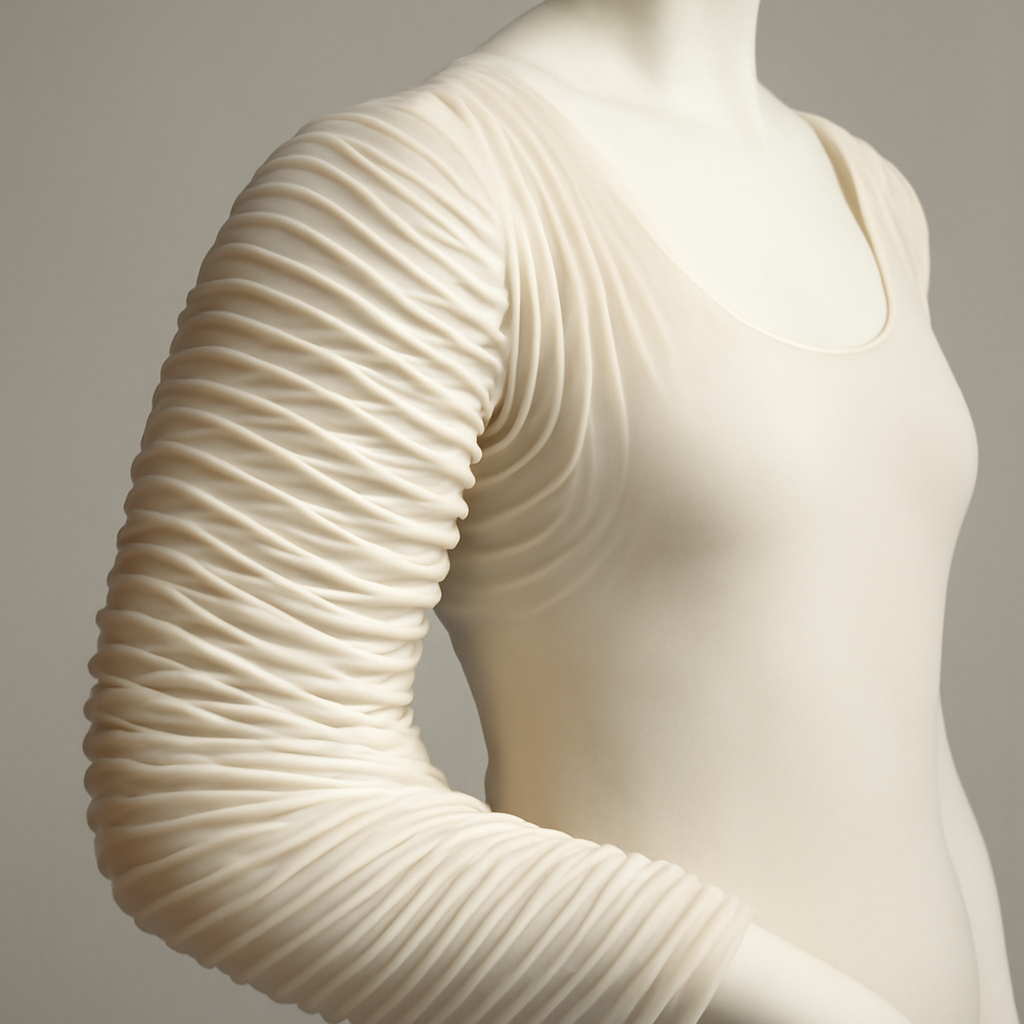
A machine that runs overnight, one thin layer at a time, producing a sleeve is not what anyone typically means by "handmade." But wash the sleeve afterward — put it through a dishwasher, top rack, an ordinary cycle — and it comes out unbothered, and the definition starts to slip a little. Five garments and a pair of shoes came out of a one-year fashion-school project built on exactly this premise: printed rather than sewn, waterproof enough to survive normal laundering, flexible enough to actually be worn rather than displayed under glass. They did not read as a stunt. They read as clothes that had simply arrived by a different route.
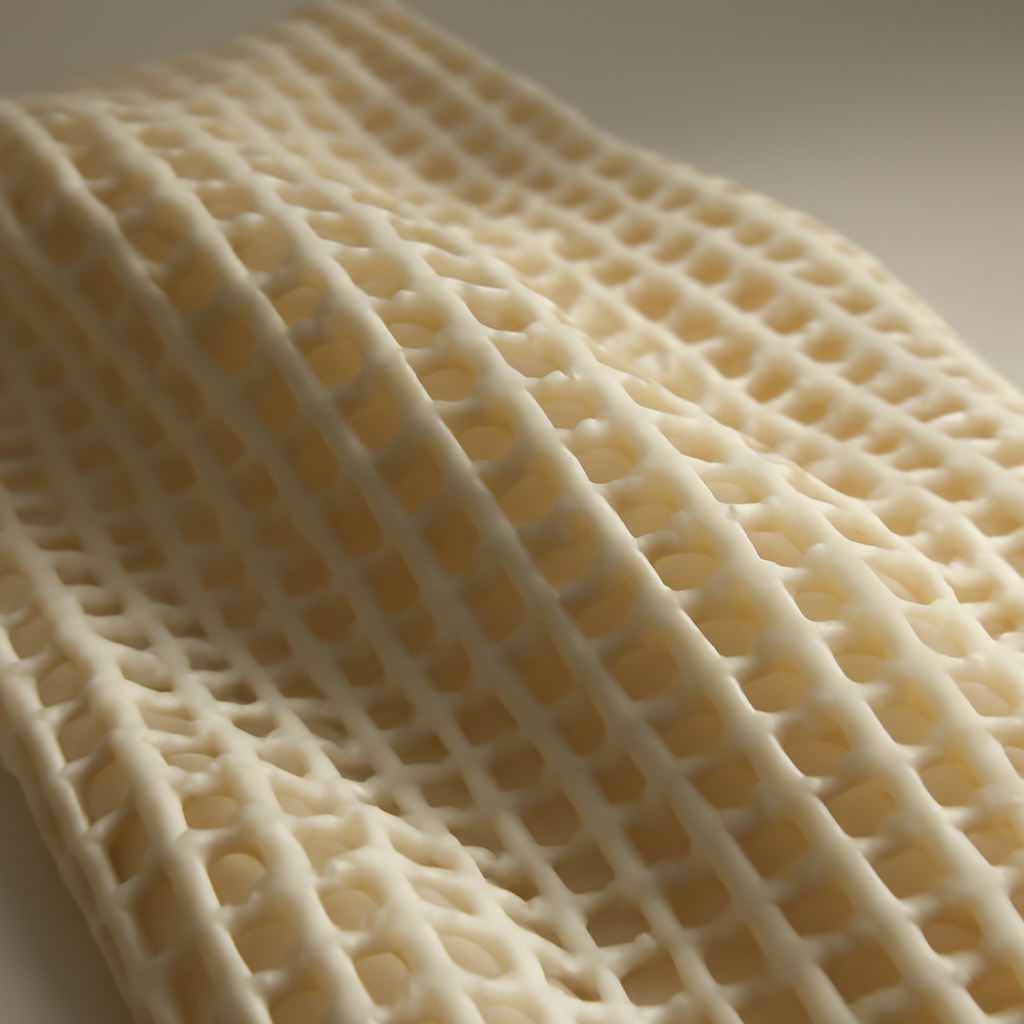
The designer was Danit Peleg, a student at Shenkar College of Engineering and Design in Tel Aviv, and the question the project was actually testing wasn't whether a 3D printer could imitate fashion. It was narrower and stranger than that: whether a consumer-grade home printer — not an industrial rig, not a factory line — could produce something a person could put on and move in. Printing a shoe or a phone case is one problem. Printing a garment is another, because a garment has to drape over a shoulder, bend at an elbow, survive a chair, and most plastics have no interest in doing any of that gracefully.
The project didn't win Shenkar's own prize for best final work that year, a detail Peleg has mentioned since without apparent bitterness. What it won instead was attention no graduate jury could have anticipated: a video of the collection circulated, the New York Times and the Wall Street Journal wrote it up, and within months a producer working for Tyra Banks's daytime show FABLife had tracked her down. She flew to Los Angeles for a segment that aired October 12, 2015 — an interview, a short runway turn — and Chrissy Teigen, then a co-host, said on air that she loved it. None of that attention was the point of the original project, but it did what publicity occasionally does by accident: it turned a technical experiment into a public question about who is allowed to make clothes, and where.
A year later, Peleg answered that question from the opposite direction. For the opening ceremony of the 2016 Rio Paralympics, she designed a 3D-printed dress for Amy Purdy, the American snowboarder and dancer who competes and performs on a prosthetic leg. Where the graduate project had been built for replication — a file that, in theory, anyone with the right printer could produce — the Purdy dress was built for exactly one body, its structure calibrated to a frame that off-the-rack fabric doesn't usually accommodate. Same machines, same logic of one layer settling onto the last, aimed at the opposite outcome: not a garment for everyone, but a garment for someone no standard pattern was drafted to fit.

Peleg's studio today, the 3D Printed Fashion Lab, is still working that same seam between the two instincts — accessible and bespoke, mass and singular. Its software takes a design intent and a sewing pattern and converts them into a structure a printer can read, using bio-based materials rather than the rubbery plastics of the first collection. Which means what she is actually designing, most days, is not a garment at all. It's a set of instructions for producing one. Somebody else's printer does the rest.
That is a strange thing to leave a customer — not a dress in a box, but a file that only becomes a dress once a person presses print, in their own home, on their own machine. Ten years on, the detail that still stops people is the one from the very first collection: put the sleeve in the dishwasher, and it comes out fine.



