
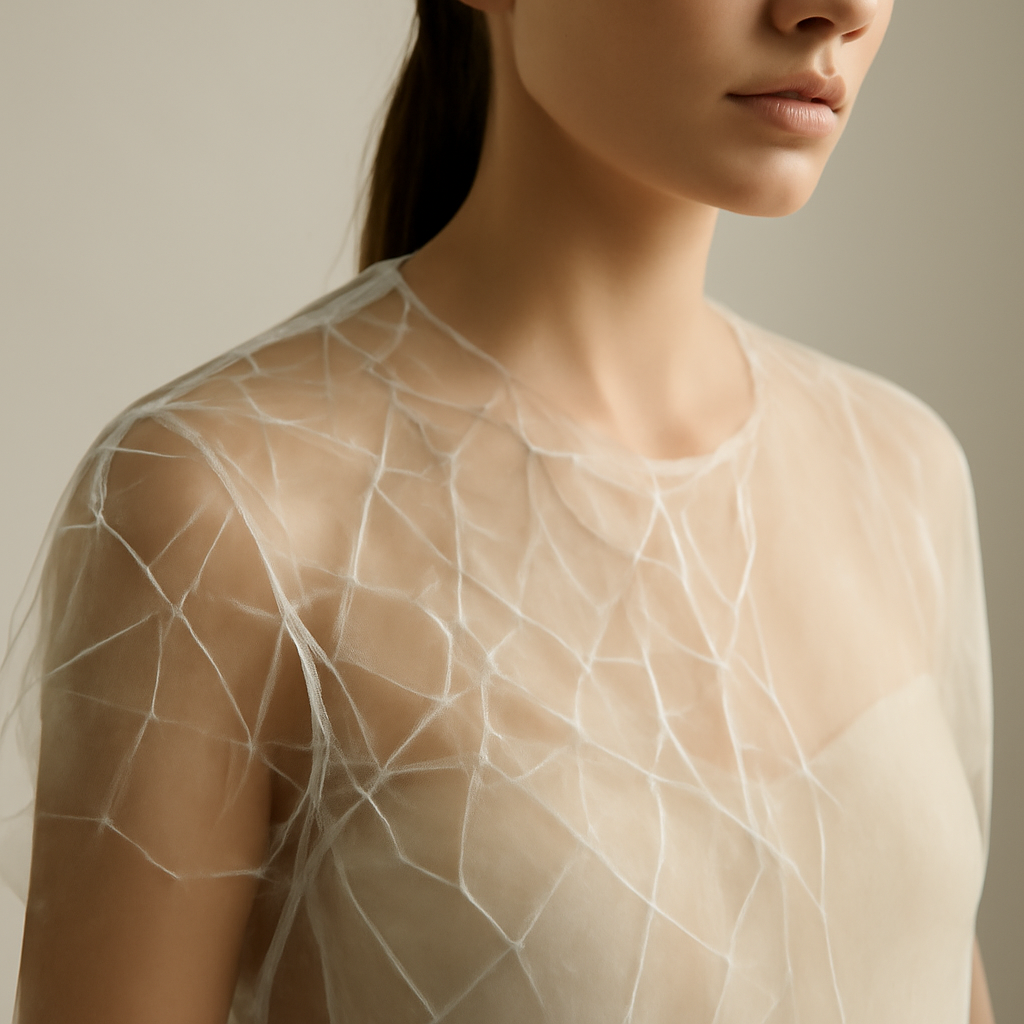
The software was built to catch mistakes. Feed a 3D-modeling program a shape a real seam can't hold — a curve too sharp, a panel that folds back through itself — and it flags the geometry as invalid, the same way a spellchecker underlines a word it doesn't recognize. Around 2014, working on her graduate collection at Shenkar College of Engineering and Design outside Tel Aviv, Noa Raviv's habit was to leave the flagged shape standing. Not fix it. Print it exactly as the program had tried to reject it.
The collection that came out of this was called Hard Copy, built, in her own description, around computer glitches and the question of what an original object is even worth once a machine can copy it endlessly. The reference point she kept returning to wasn't technological at all — it was classical sculpture, the kind that exists today only as a plaster cast of a cast of a marble original, each generation a little further from whatever the first version actually looked like. "Those sculptures were copied and reproduced many times throughout history," she has said, "until it became something that's even a bit kitsch." A software error, to her, was doing the same work faster: taking a clean original intention and returning something stranger, slightly wrong, unmistakably itself.
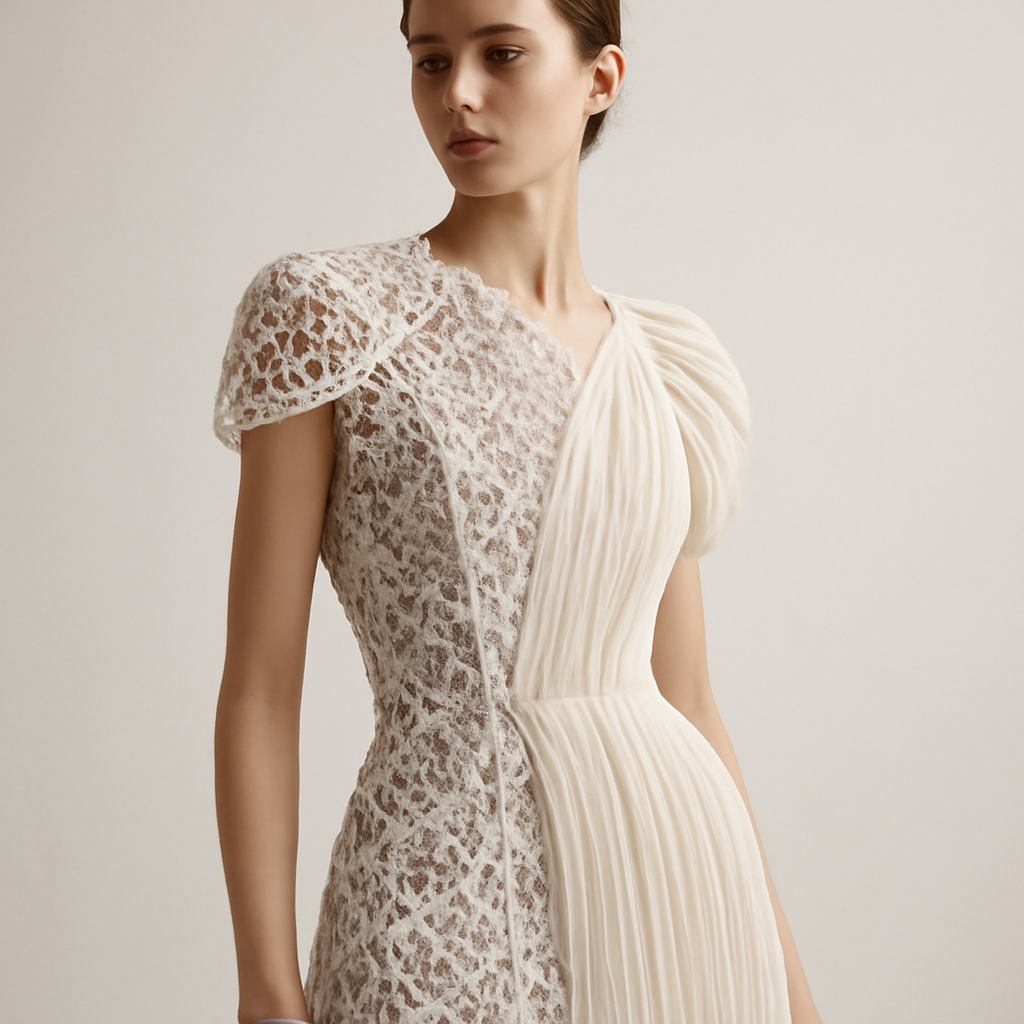
What she actually builds with those flagged shapes complicates the premise in a way that's easy to miss if you only see the finished photographs. In 2016, working with the 3D-printing company Stratasys, she produced two pieces exhibited at the Metropolitan Museum's Manus x Machina show — a survey built entirely around the line between hand and machine in fashion, and a fitting place for garments that start as deliberate computer errors. But Raviv has always been exact about where the actual labor goes: "The garments, even though there are a lot of things that are digital inside them, at the end they are made through very traditional means." Her studio process is, by her own account, mostly hand stitching, barely any machine stitch, a great deal of draping — the oldest tools in the room doing the work of finishing what the newest tool in the room got wrong on purpose.
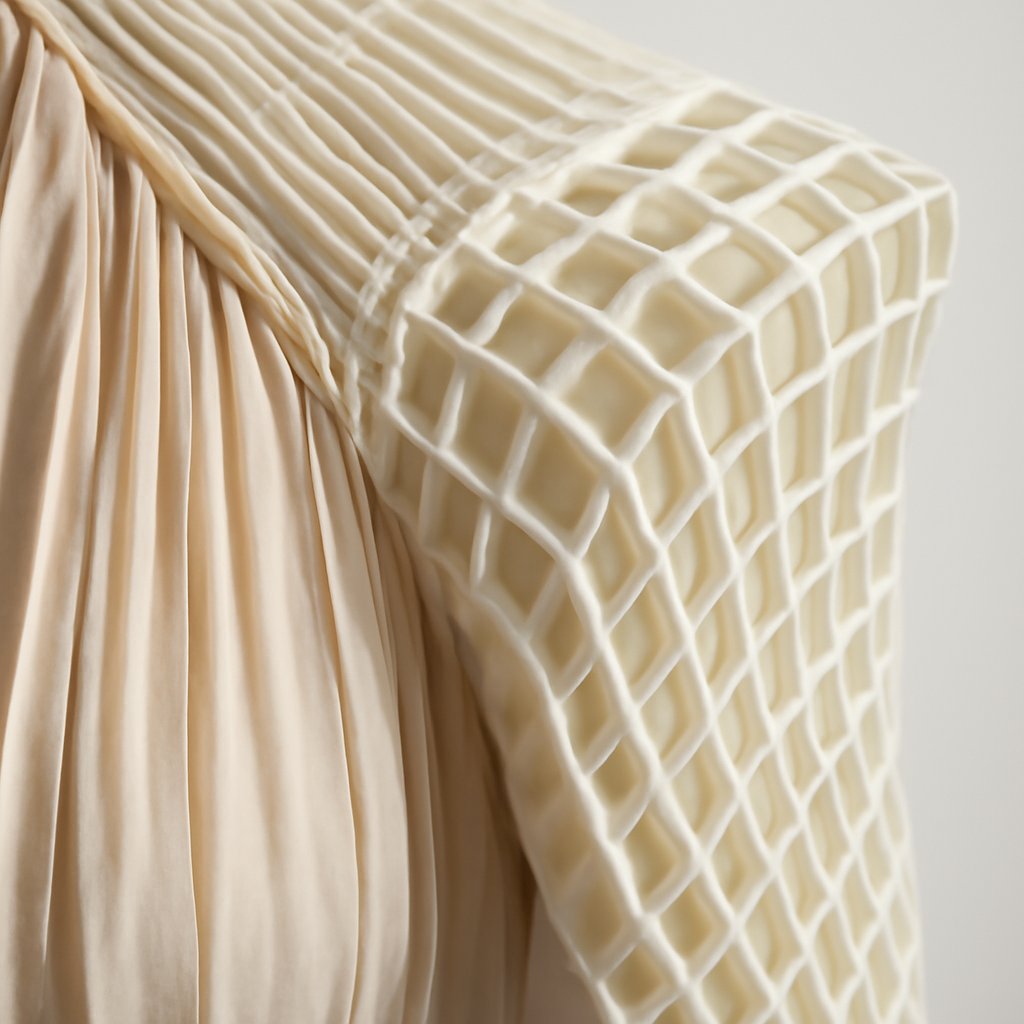
That split is the real subject, more than the plastic. A garment born from a software error is, on paper, the most reproducible object imaginable — the file exists, the printer exists, nothing stands between one copy and a thousand. In practice, the hours of draping and hand-finishing around each printed panel mean no two pieces come out quite the same, and Raviv herself can't exactly duplicate an early one if she tried. The machine supplied the mistake. The hand made the mistake impossible to repeat.
By her 2017 collection, the printed elements had shrunk to almost nothing, and the bulk of the work had migrated fully into hand-stitched garments — not a retreat from the original idea so much as its logical end point. If the point was never the plastic, then the plastic was always going to be the smallest part of the finished piece, there mainly to prove a shape could exist before anyone agreed to sew it.
Somewhere in a studio in Tel Aviv there is a single early panel, printed once off a command the software never should have accepted, that no later technology — hers or anyone's — has managed to produce again.



