
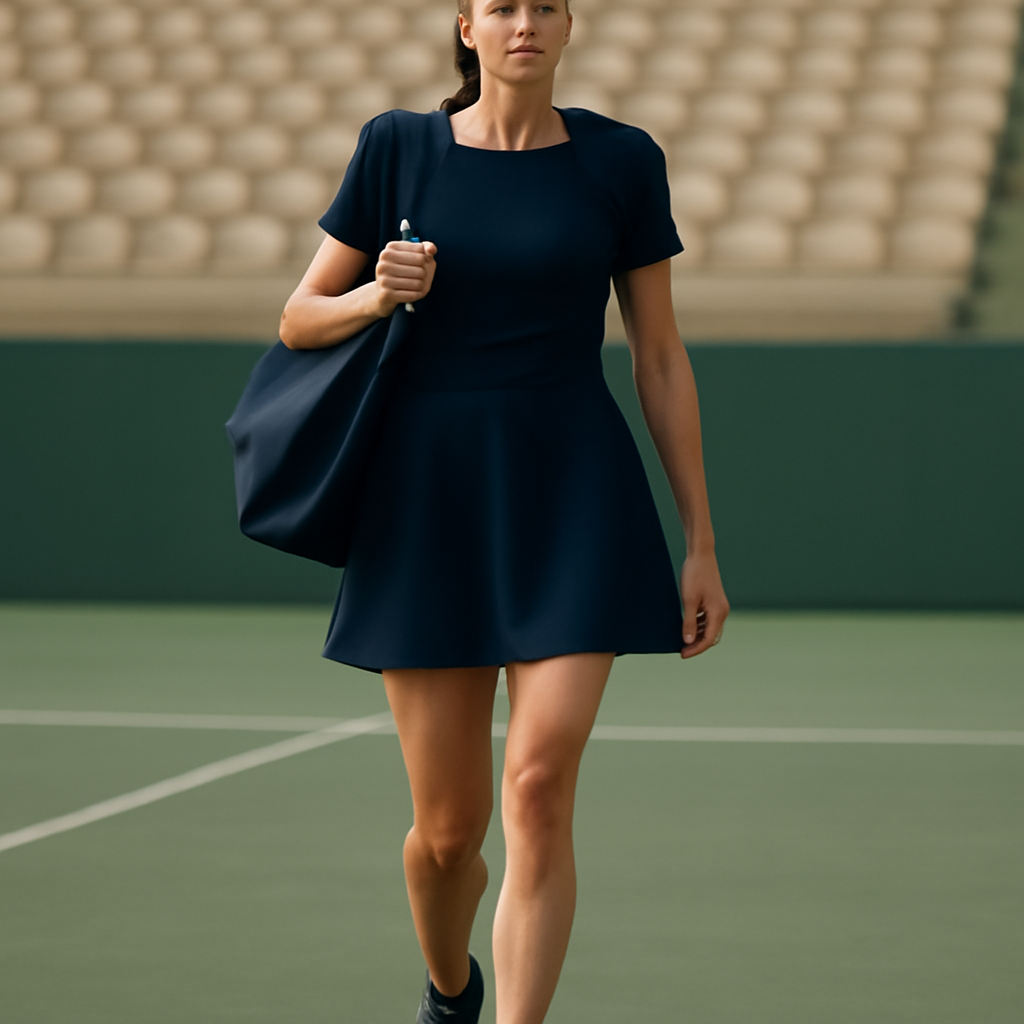
She walked out onto Arthur Ashe Stadium on the first Tuesday of September in a navy dress that had nothing to do with a mood board and everything to do with a zip code. The pattern, the seaming, the palette that would carry across her looks for the tournament — all of it had been built around New York's garment district, the blocks where, for most of a century, American ready-to-wear was actually cut and sewn before anyone thought to call it an industry. A reimagined bomber jacket came out over it, gathered at the cuffs, a two-way zip down the front, more workwear than warmup gear. The dress underneath did the talking.
The player was Coco Gauff, twenty-one years old, raised in Delray Beach, Florida, after her family moved back from Atlanta so she could train competitively — the household had been chasing a version of Serena Williams's career since Gauff was small enough that the goal barely needed saying. She was opening her US Open campaign against Turkey's Zeynep Sönmez on the same court where, on September 9, 2023, she won her first Grand Slam title at nineteen, beating Aryna Sabalenka in three sets. "New York is really special to me," she said before this year's tournament — "this is where I won my first Grand Slam, and coming back here for the US Open is always incredible." It is the kind of line an athlete says most years without it meaning very much. This year, New Balance built an entire kit around the idea that she meant it.
The neighborhood the kit borrows from has its own uniform history. The stretch of Seventh Avenue between Twenty-Sixth and Forty-Second Streets was officially designated "Fashion Avenue" in 1972, a formal name for a role the district had already held for decades: cutting rooms and pattern-makers stacked above street level, a needle-trades workforce dense enough to support its own ecosystem of button-makers and pleaters and fabric wholesalers within walking distance of each other. Little of that manufacturing still happens there; the design offices remain, the factories mostly don't. A tennis dress citing that specific geography, rather than a generic sense of New York, is citing the part of the city that used to make things, not the part that photographs them.
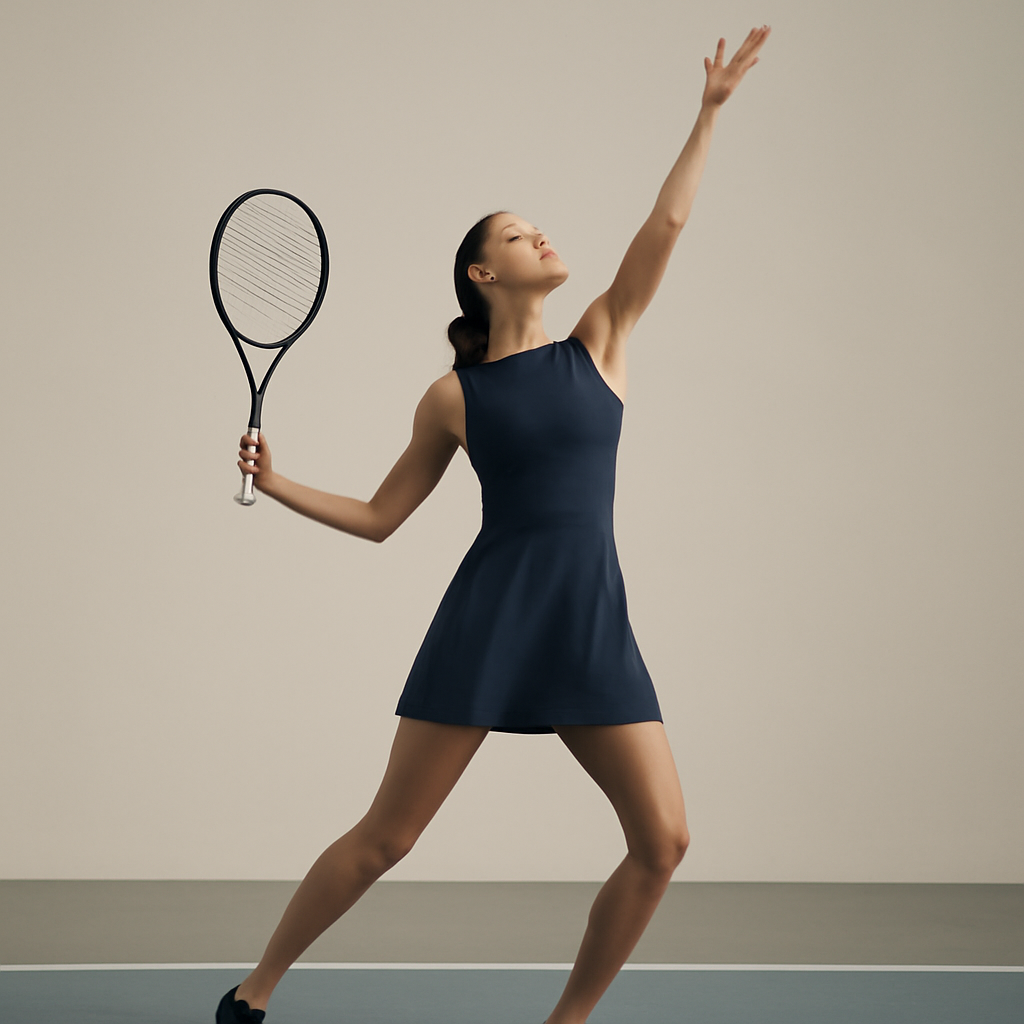
The rest of the kit extends the logic rather than restating it. Her second-round look, in solid and patterned versions, comes dyed in "dawn glow" and "enoki" — a palette that also colors a new edition of her signature CG2 shoe, so the dress and the sneaker read as one decision rather than two sponsor deliverables stapled together. A bright purple racquet bag and a matching duffle complete the set, which is a lot of coordination for an outfit that exists, first and foremost, to be sweated through in front of twenty thousand people and forgotten by the second set.
That coordination is the actual point. Most athletes wear a uniform designed to disappear — to read as neutral, interchangeable, a canvas for a sponsor's logo and nothing else. Gauff's this week reads as a costume with a thesis: a specific place and a specific labor history, translated into cut and color rather than announced in a press note. Seventh Avenue doesn't appear anywhere on the dress. It doesn't need to. The dress is the citation.
By the time she left the court, having opened her title defense with a win, the jacket was back on, cuffs gathered, zip pulled partway up against the September evening. Nothing about the walk off the court announced where the clothes had come from. It didn't have to.



