
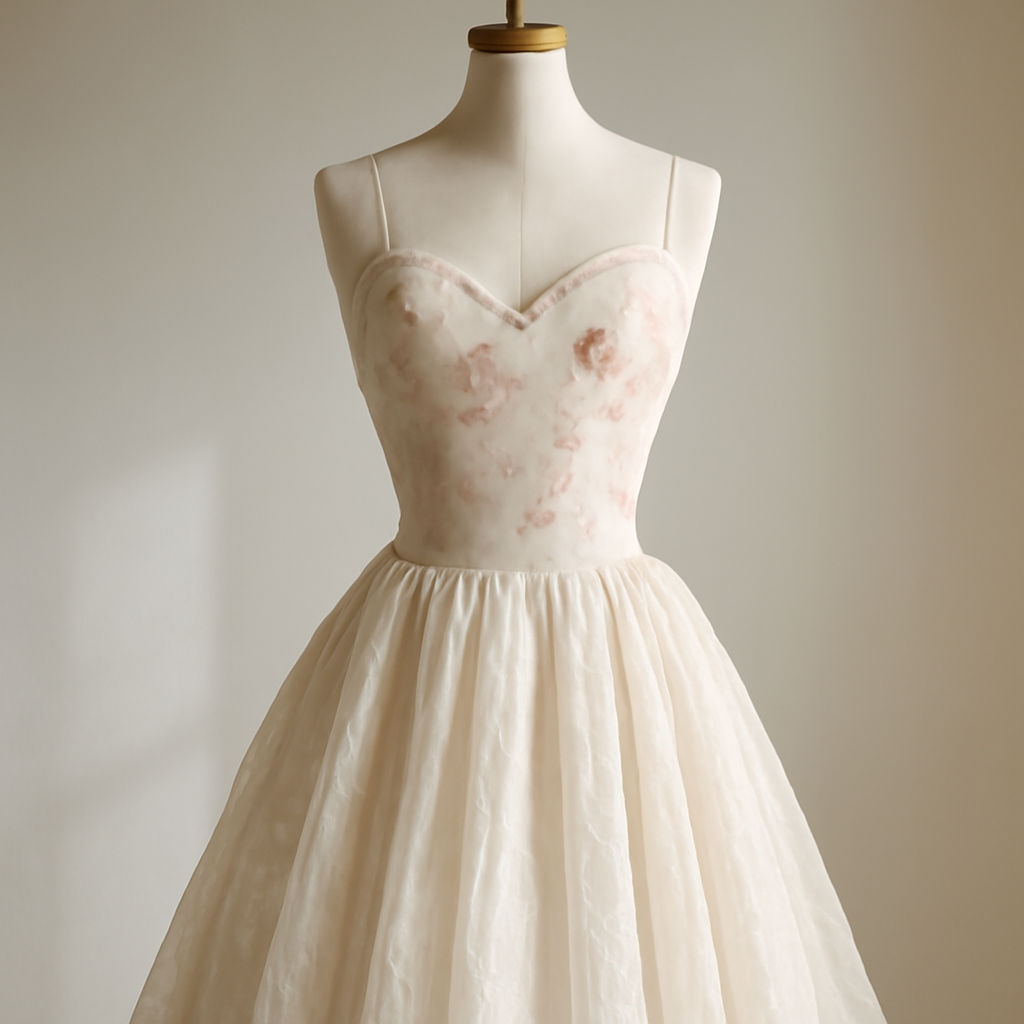
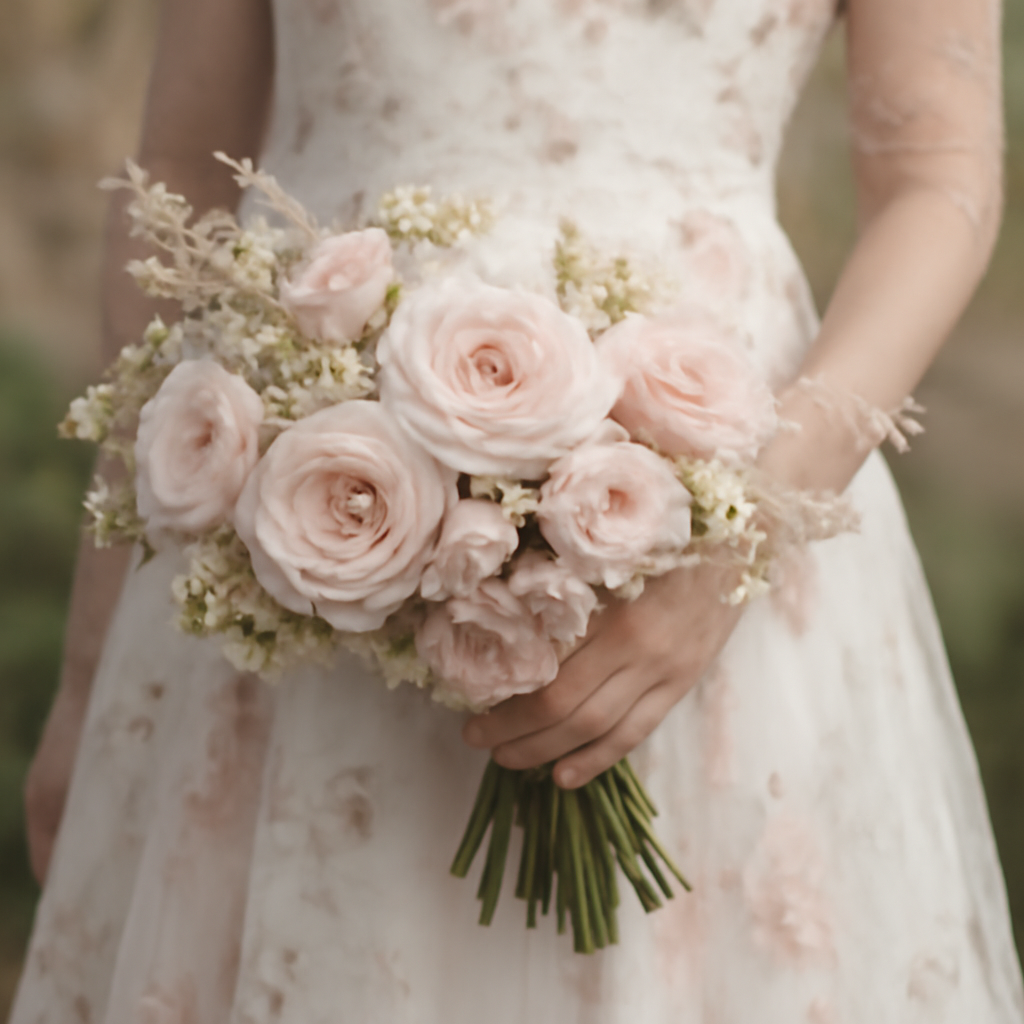
Months before any florist was booked, she was mailing color swatches back and forth with a design team in New York, refining one exact wash of pink for a bodice that didn't exist yet. The gown that eventually arrived was a modified take on Danielle Frankel's "Juniper" silhouette — cream, threaded through with pastel blue, its skirt built from crinkled organza, its waist and hip recut against the original pattern until the proportions belonged to no one else's order. Every flower hand-painted across the fabric would later turn up again, matched close to petal for petal, in a bouquet nobody had chosen yet.
She paints for a living — canvases shown in galleries, the kind of practice where a color relationship gets settled one wash at a time rather than picked off a swatch card. The wedding itself happened in June, at Carmel Valley Ranch in California. It isn't a surprise, in hindsight, that the habit of deciding what a color is allowed to sit next to came with her into a bridal commission — or that she treated the gown less like an order placed with a bridal house than like a collaborator's canvas, one she had opinions about before the paint had even dried.
Most brides choose a size and a neckline from what's already on a sample rack. She chose a base silhouette and then spent months revising it — the waist recut, the length adjusted, the hip exaggerated past where the original pattern intended it to sit — the way a painter keeps returning to the same canvas to move one shape half an inch. The dress that resulted from that back-and-forth was never going to be mistaken for anyone else's.
Once the gown existed, everything else in the day got built backward from it. "The second I found my dress, I knew the aesthetics of the wedding needed to be built around the gown," she has said of the decision. The florals, arranged by Unwritten Florals, were keyed to the same blush running through the paint on the bodice — a bouquet quoting a garment, rather than the more usual order of operations. Every guest was asked to wear black, a rule with one obvious function: so that nothing in a room full of people competed with the one object that had been in development the longest.
A veil, simple and unadorned, was the only other thing added — Frankel's plainest style, chosen specifically so it wouldn't compete with what the dress was already doing. In the photographs, in a room dressed entirely in black, the one wash of color anyone can find is the one that got mixed, approved, and painted onto silk before a single flower had been ordered.



