
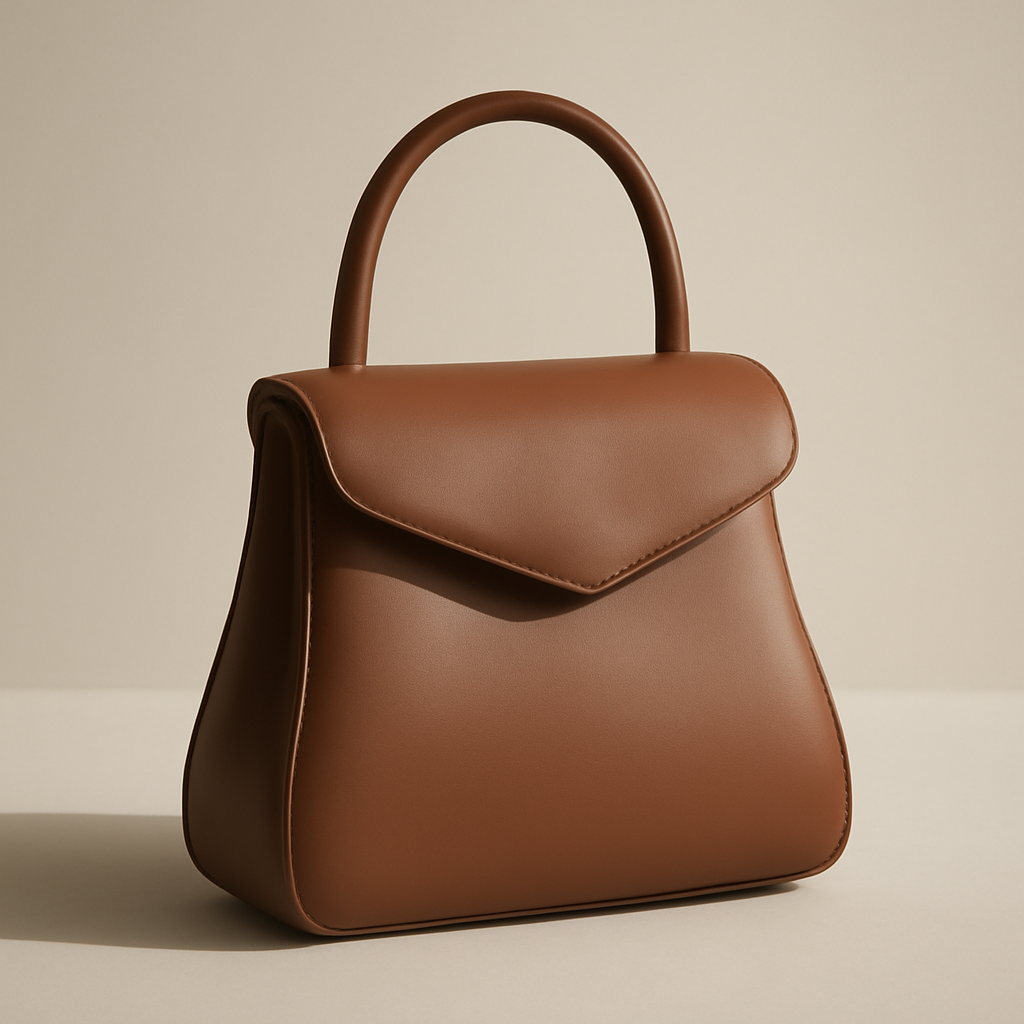
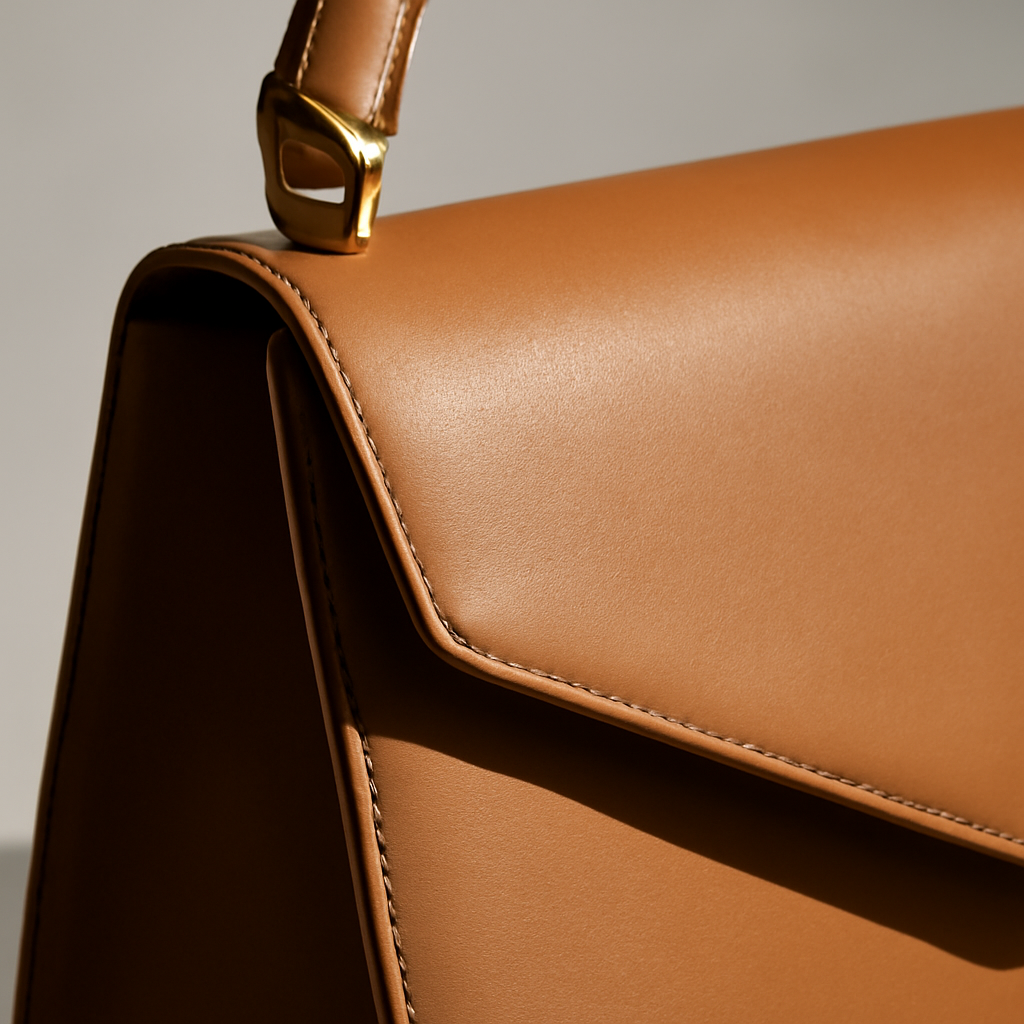
The bag is called the Hourglass Avenue, and the change from its predecessor is not dramatic so much as it is total. It keeps the same cinched, curved silhouette Balenciaga has sold since 2019, but a second handle is now hinged and hidden, and a soft flap folds over the top and locks shut rather than gripping the bag's shape from the outside. Where the original held its curve like something built to resist pressure, the new one settles a little under its own weight, the way fabric does rather than the way a frame does.
That original curve was never arbitrary. Demna introduced the Hourglass in Balenciaga's fall 2019 collection, drawing the shape directly from Cristóbal Balenciaga's own Basque waistcoats of the 1950s — tailoring built to exaggerate the body through clean architectural line, the same logic that gives the house's most recognizable garments their sculpted rigidity. Cristóbal Balenciaga learned that discipline the hard way, apprenticing with a tailor in San Sebastián before opening his first maison in 1917 in Getaria, the Basque fishing village where he'd grown up the son of a seamstress, and carrying the whole grammar to Paris only after the Spanish Civil War forced the move in 1937. The original Hourglass was less an accessory than a piece of his couture logic translated into leather: a hard shape justified by history rather than convenience. Every creative director who has since run the house has had to decide, consciously or not, how literally to keep obeying that logic.
Demna), who introduced the bag, brought a different history to that same rigor. He was ten when his family fled Sukhumi during the war in Abkhazia, their home destroyed in the shelling; they crossed the Caucasus Mountains to Tbilisi before eventually settling in Düsseldorf. He trained at Antwerp's Royal Academy of Fine Arts, then spent years at Maison Margiela and Louis Vuitton before co-founding Vetements and taking over Balenciaga itself in 2015, a decade in which the house's revenue grew from roughly $390 million to close to $2 billion. He tended to treat the Basque tailoring dogma as material to distort rather than preserve outright — hoodies re-engineered with couture proportions, the Hourglass's own rigidity read less as reverence than as armor. The bag's hardness wasn't only aesthetic memory. In his hands it doubled as a specific kind of logic: build the shape so it holds regardless of what's pushing against it.
By the time Pierpaolo Piccioli inherited it, the Hourglass had become something closer to shorthand. It sold out within its first season, returned each year after in new sizes and materials, and was recognizable enough that Gucci built its own version of the curve into a single collection under Alessandro Michele — the sincerest kind of citation an accessory can receive. Inheriting a shape that famous is its own kind of constraint. Piccioli spent the twenty-five years before this one at Valentino, the final sixteen as its sole creative director, where his signature instinct ran closer to the opposite of Demna's: gowns that floated rather than gripped, a hot pink so identified with his eye the house eventually just called it Pink PP. He was named Balenciaga's creative director in May 2025, arriving at a house whose defining object was, structurally speaking, everything his own work had spent two decades unbuilding.
A bag is a small thing to hang a transition on, but hardware rarely lies about intention. The fold, the hidden second handle, a lock that closes rather than a clasp that grips — each is a decision made by a hand that has spent a career letting fabric settle instead of holding it taut. Piccioli's choice wasn't to clear the house's most famous object to make room for a new one, the way an incoming director sometimes does. He kept the curve's premise and disagreed with its conclusion.
The Hourglass Avenue went into select boutiques this week, ahead of Piccioli's first full runway collection for the house this October — an advance note rather than an afterthought. Worn closed, the bag now shows only the fold. Whatever shape insisted on being visible before is tucked underneath it, out of sight, still doing its work regardless.



