
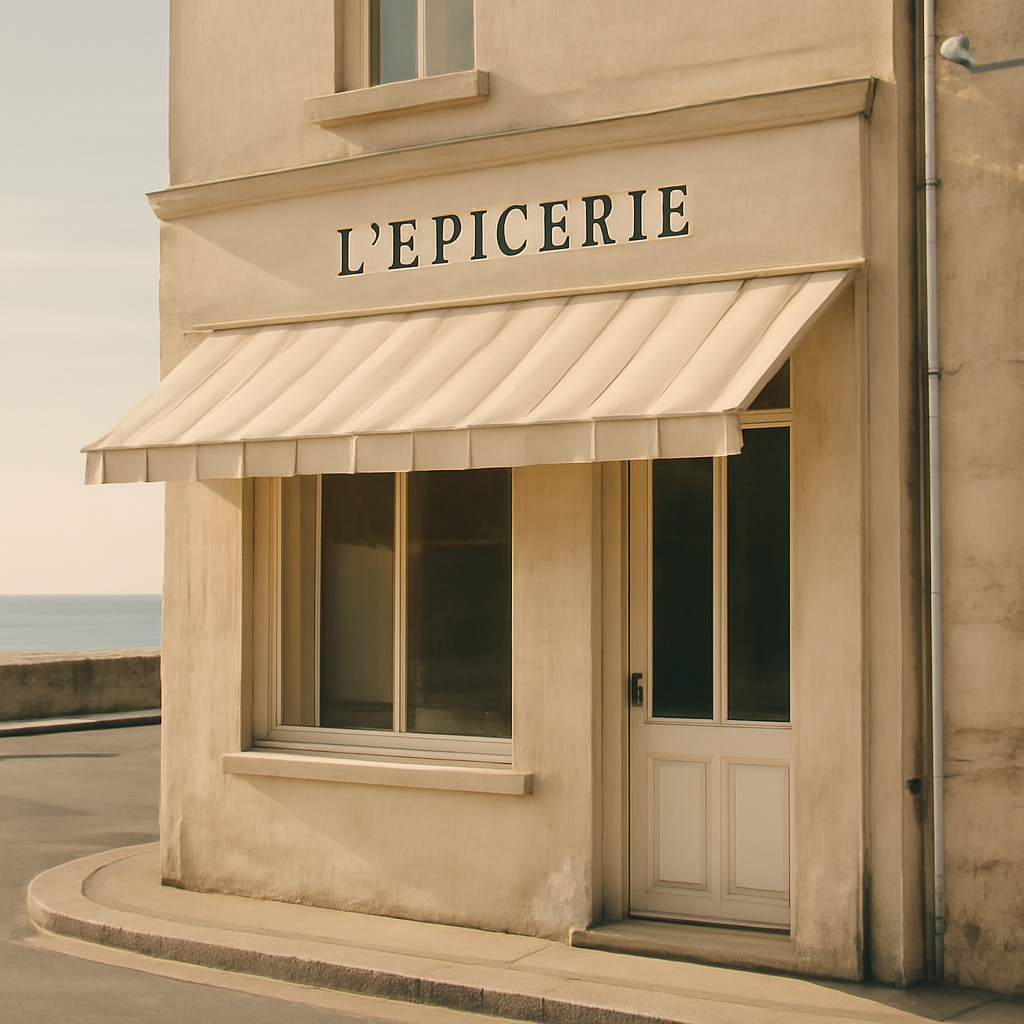
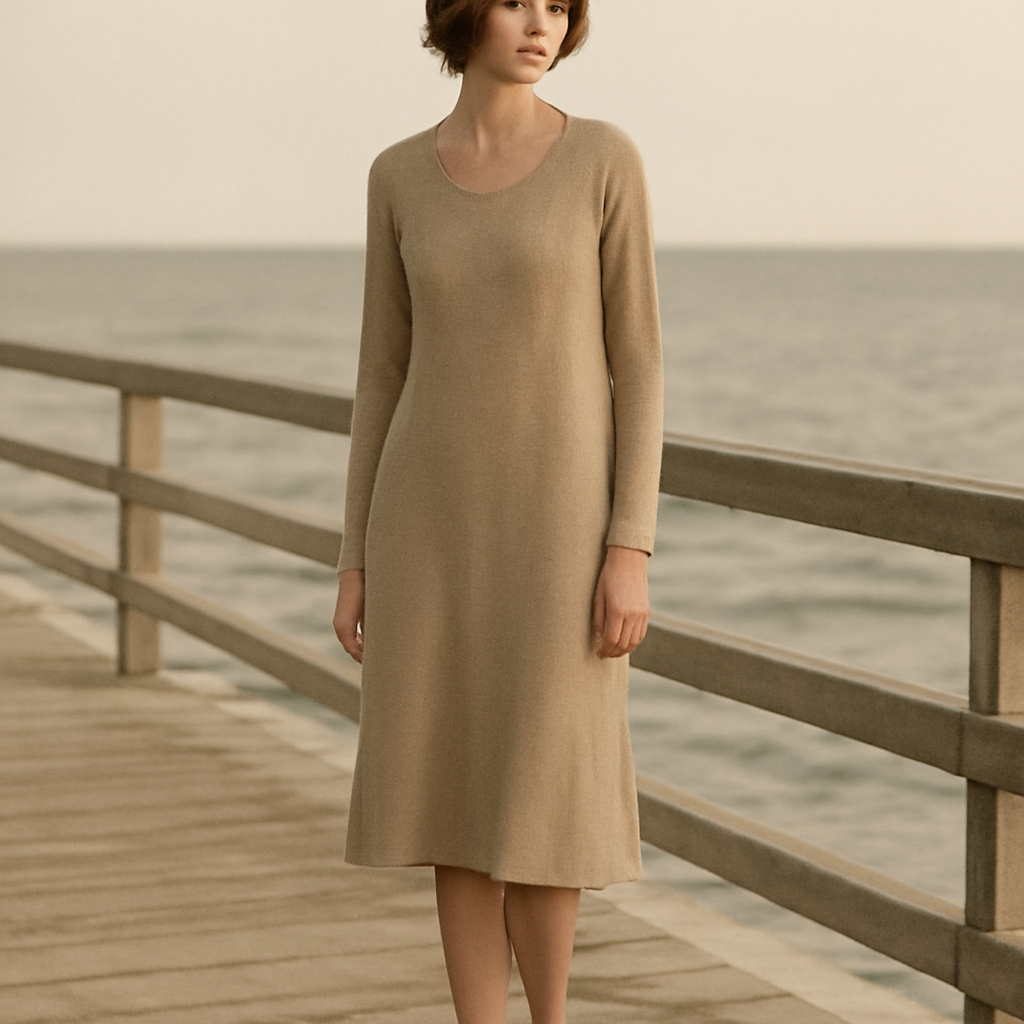
In the summer of 1913, a shop opened in Deauville with no name over the door but a woman's own. It sat between the casino and the Normandy Hotel, rented for her by a lover with money, Boy Capel, an Englishman she would later repay in full. Inside hung dresses made of jersey — a fabric until then reserved for men's underwear, considered too limp, too cheap, too without structure to be worn by a woman who could afford otherwise. Chanel sold it to them anyway. She hired a model named Adrienne to walk the boardwalk in it that summer, and by August the wealthy women vacationing in Deauville, women who had arrived in corsets built for sitting rather than moving, wanted the shapeless grey dress instead.
Next April, more than a hundred years later, Chanel will stage its cruise 2027 show in that same town. Matthieu Blazy — born in Paris to a Belgian father and a Spanish-Indian mother, trained at La Cambre in Brussels, seasoned at Maison Margiela, Céline, and Calvin Klein before four years remaking Bottega Veneta — will present it, his second cruise collection since arriving at the house last winter. His first, shown this past spring, went to Biarritz, another coastal town Chanel claimed early: she opened an atelier there in 1915 and introduced, four years later, one of fashion's first true resort collections for the cosmopolitan travelers who wintered there. Two shows, two towns, and both of them places Gabrielle Chanel picked for herself before anyone was calling it a house.
There's a particular kind of company that keeps a founder's handwriting on file long after the founder is gone — a signature scanned into onboarding paperwork, a quote framed in the lobby. Most of it functions as decoration, evidence of a story rather than a living relationship to it. What Blazy is doing with Biarritz and Deauville reads differently, closer to a study than a shrine. A person can look up a company's founding city. It takes something more deliberate to actually go there twice in one year, tracing the geography roughly as Chanel herself moved through it — except run in reverse: Biarritz first, then Deauville, the second stop revealing itself as the earlier and more foundational one.
Fashion keeps a handful of these literal addresses on hand, half-monument and half-inconvenience. In Granville, on the Normandy coast not far from Deauville itself, the cliffside villa where a one-year-old Christian Dior moved with his parents in 1906 still stands, its English garden of roses and lily of the valley kept more or less as his mother planted it — the same lily of the valley he later spent a fortune trying to bottle as a signature scent. Dior returned to that garden every summer as a boy and, by his own account, never stopped designing around what he learned there. The villa is a museum now, and no one expects a Dior collection to be shown on its lawn. What Blazy is proposing at Chanel is stranger and slightly riskier than a museum visit: not preserving the founding site behind glass, but putting new work back into circulation on the actual ground where the old work started, letting the two versions sit close enough to be compared.
Bruno Pavlovsky, the president of fashion at Chanel, called Deauville "this foundational place" when the show was announced — a phrase that could describe either the town or the year, 1913 being the year most historians mark as the actual beginning of the house, before the ateliers, before the tweed, before the interlocking C's meant anything to anyone. It is easy, and mostly harmless, to treat a founding story as myth: soften it, round its edges, let it become the kind of thing repeated at press events without anyone checking the address. It is a different exercise to book the actual shop's actual street and stage a show there, because a street doesn't flatter you the way a myth does. It has weather. It has a casino next door that's still a casino. It has a Normandy Hotel that's still, more or less, a hotel.
What a returning designer risks, in a move like this, is the gap between the original gesture and its reenactment. Chanel sold jersey to Deauville's wealthiest women because the fabric was genuinely disruptive — cheap, comfortable, a rebuke to a corset economy that had organized women's bodies around sitting still. A runway show, by contrast, disrupts nothing; it is, definitionally, an occasion, staged for people who already agree with its premise. Blazy cannot recreate what Chanel did in 1913, because the conditions that made it radical no longer exist. What he can do — what going to Deauville rather than merely referencing it suggests he intends to do — is test whether the place itself still has something to say once the myth is stripped back to an actual shopfront, an actual casino, an actual hotel.
No name is confirmed yet for what he'll show there. But the town will still be standing between the same two buildings it stood between in 1913, and whatever walks that stretch of boardwalk next April will be doing it in the specific slant of April light Deauville gets and nowhere else — the thing a photograph actually catches. Not the myth.



