

Kei Ninomiya built his house's name on hardware — spikes, zips, motorcycle leather, armor for a body that expects to be attacked. For spring, backstage after the show, he offered a translator two words for what had just gone down the runway instead: petal rebellion.
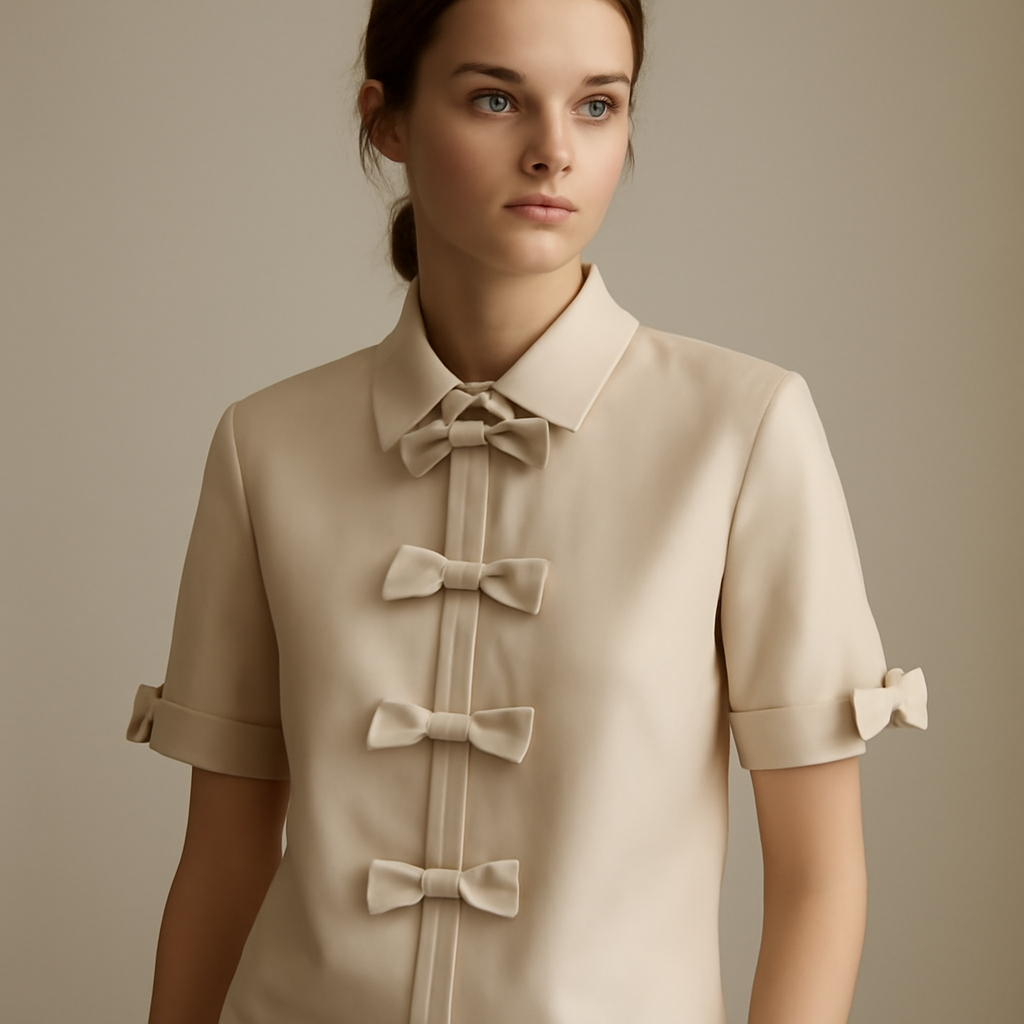
A short-sleeved shirt, finished with bows at the cuff and running down the front where a line of buttons usually goes. The fastening itself made soft.
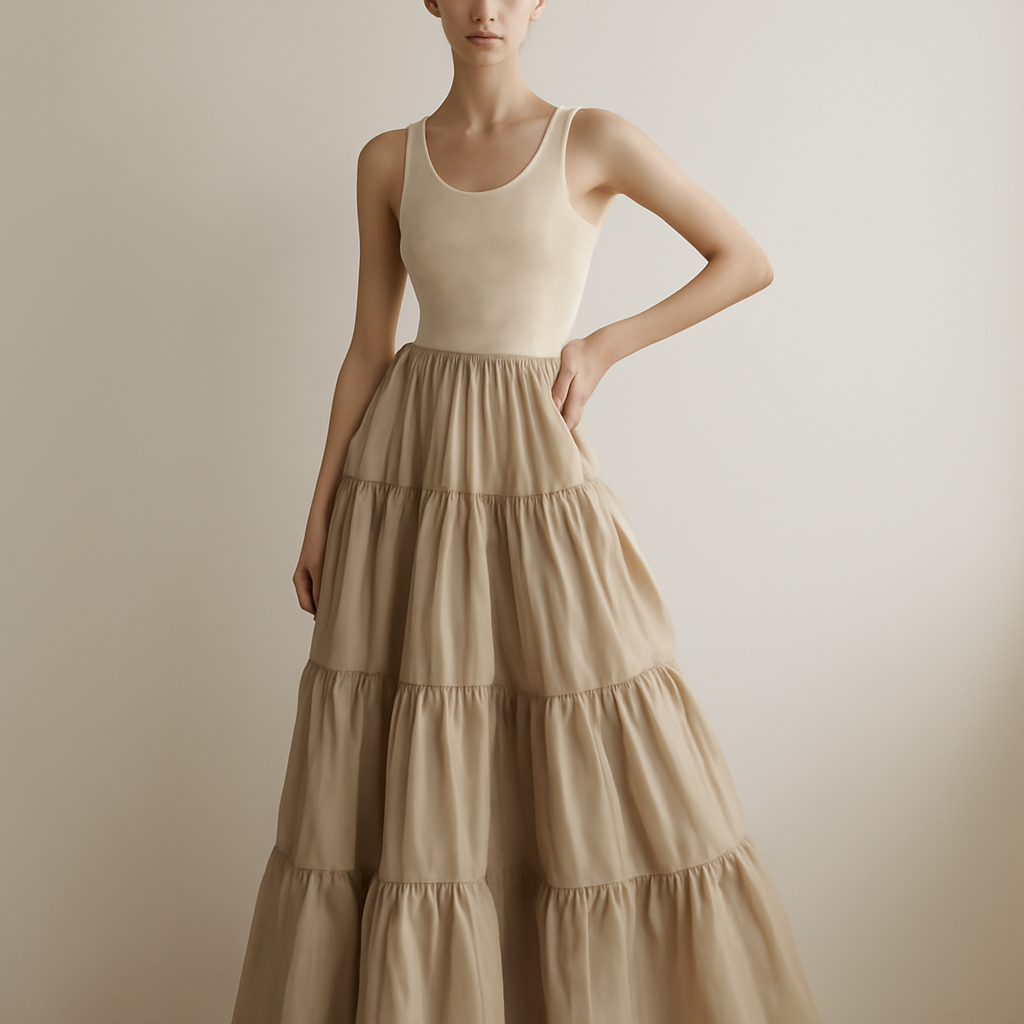
A tiered skirt where every layer has its own drawstring, each one cinching independently of the others — a garment with no single waist, only a stack of smaller decisions about where to pull tight.
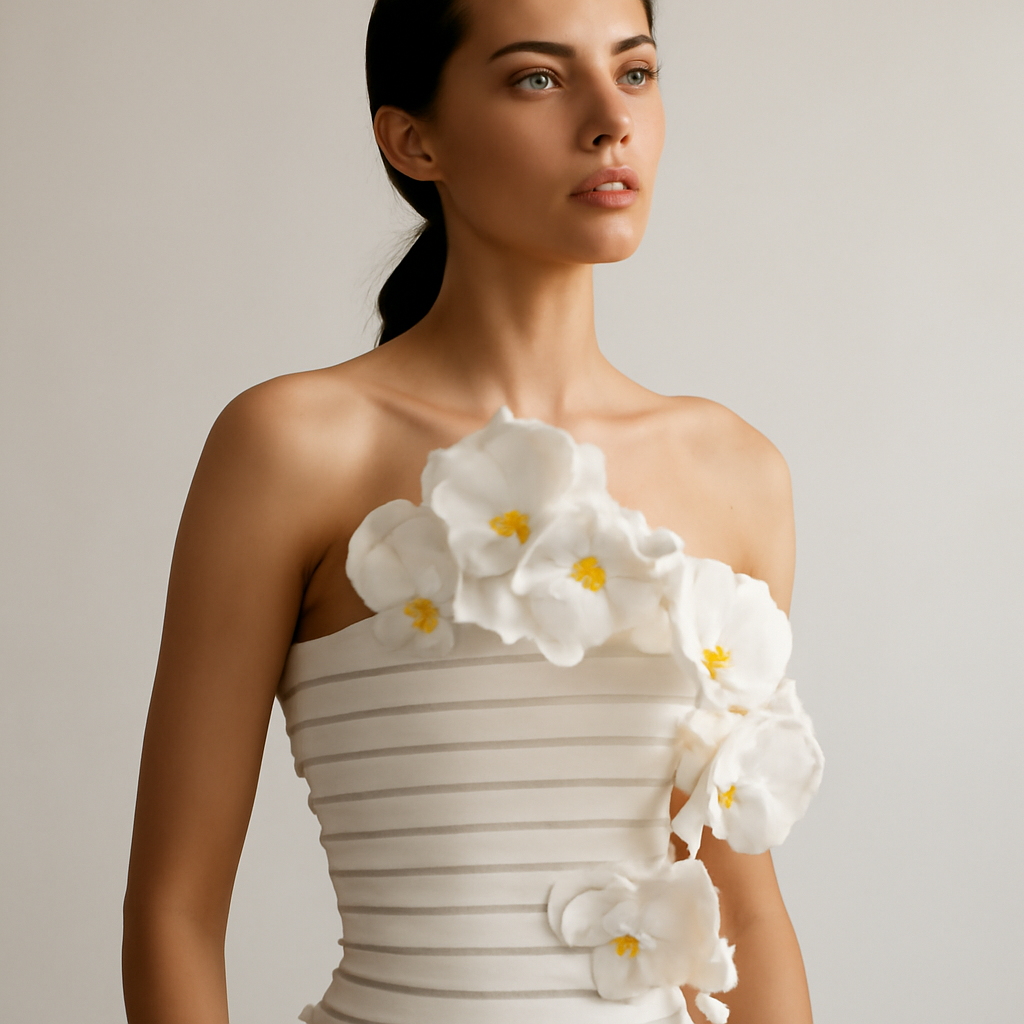
Models moved past with flowers coming out of their mouths, or trussed into tubes studded with orchids — "a kind of armor of peace," the designer called it through the same translator, which is either a contradiction in terms or the whole point.
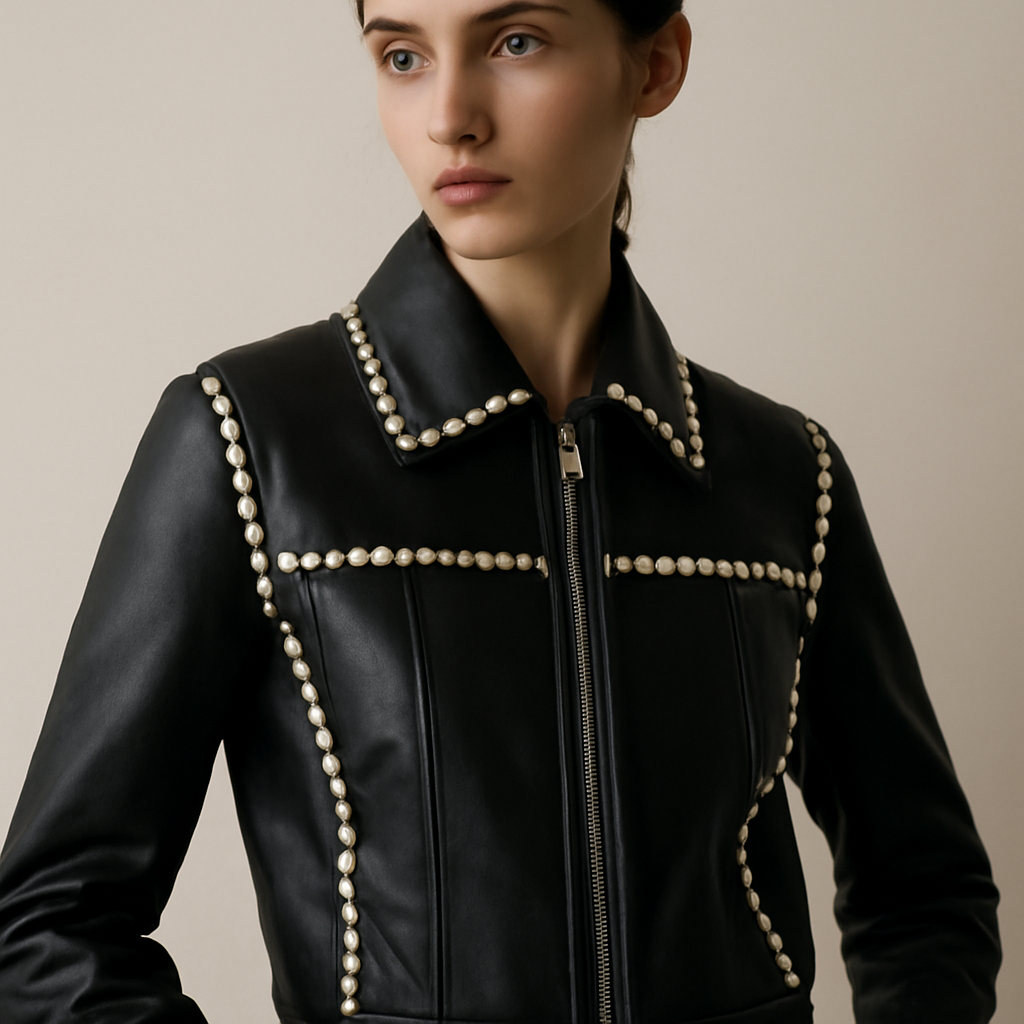
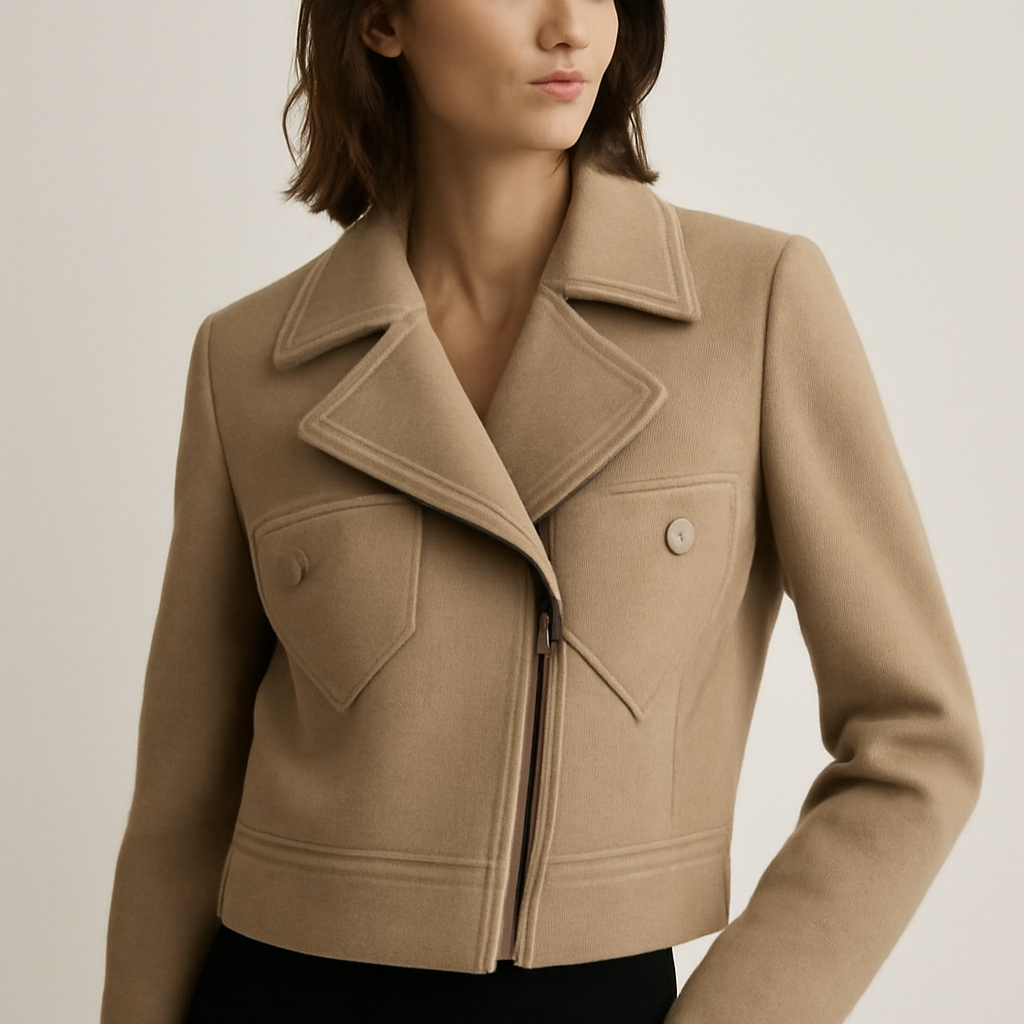
The cropped biker jacket survived the season's edit, but its pockets had been buttoned shut into the shape of a heart. A garment built for carrying things now mostly performing the gesture of a garment built for carrying things.
Ninomiya came to this house sideways — French literature studies first, then the Royal Academy of Fine Arts in Antwerp, then years spent as a pattern-cutter under Rei Kawakubo before she decided the clothes he was making under her roof deserved his own name on the door. Noir launched in 2012, and black has stayed his working material ever since — not a rule so much as a stated preference: "I love black, that's all. I don't really care about colours." Spring's flowers are the first real argument against the house's own hardware — not a softening of its temperament, on this evidence, so much as proof the temperament never needed spikes and zips to begin with.
Last down the runway, a creature in moss-covered horns, pearls swaying from its fringe like something still deciding whether to be elegant or feral.


