
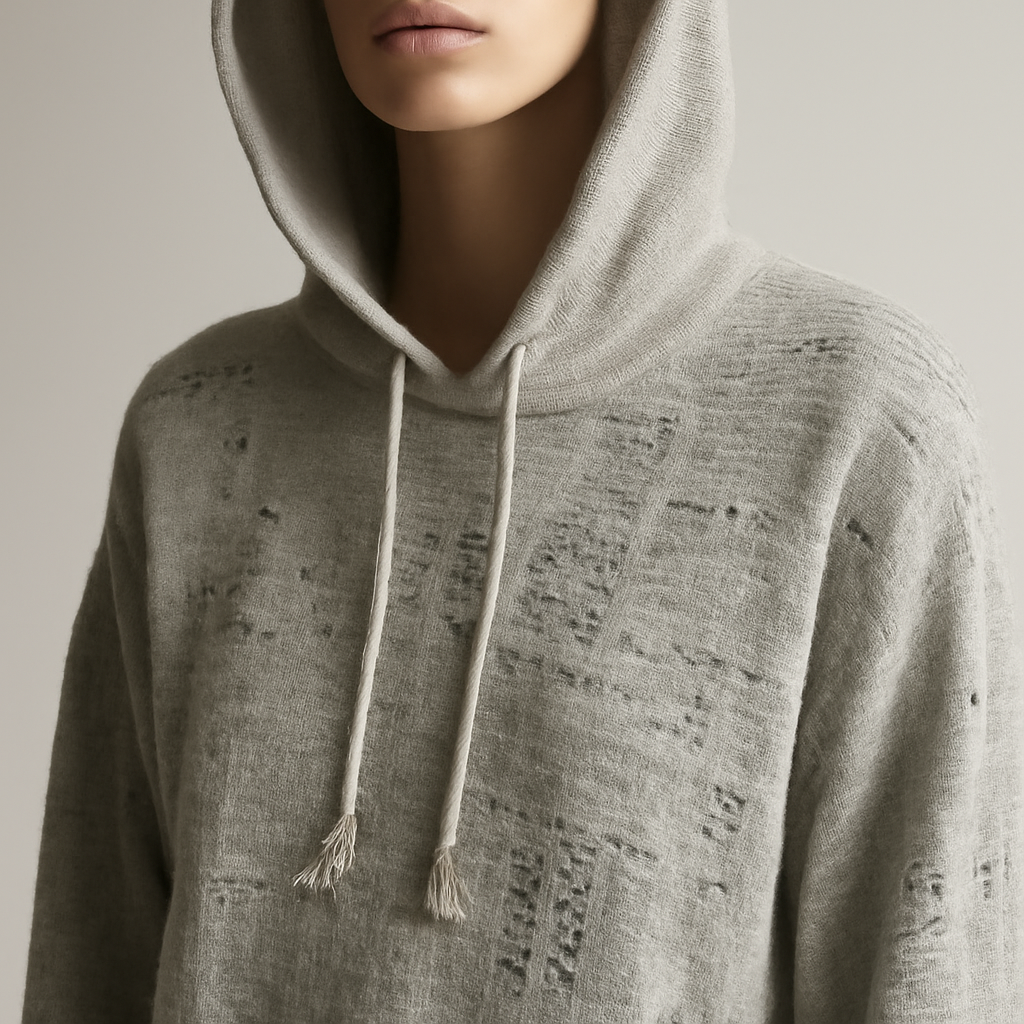
On the last day of August, walking onto Arthur Ashe Stadium for a first-round match, Naomi Osaka wore a hoodie with someone else's newsprint woven into it — clippings visible at close range, worked into an asymmetrical burnout weave rather than printed over the top of it. A white tulle skirt underneath. Braids, an athletic headband, and two mismatched sleeves, one black and one red, one on each arm. Nothing about the outfit was built for the run of play. All of it was built to be read.
The look came from Law Roach — better known as Zendaya's stylist — working with Who Decides War, the New York label Everard "Ev Bravado" Best built on a design language borrowed from military surplus and DIY construction. Between them, they built the outfit as a tribute to Allen Iverson: the braids echoing his, the newsprint standing in for the sports pages that once covered him, the mismatched sleeves nodding to the single compression sleeve he wore under his jersey — a detail officials eventually tried to legislate off him along with the rest of his wardrobe.
Osaka was born in Osaka to a Haitian father and Japanese mother, and moved first to Long Island and then to Florida by the age of three, training there through her teens.
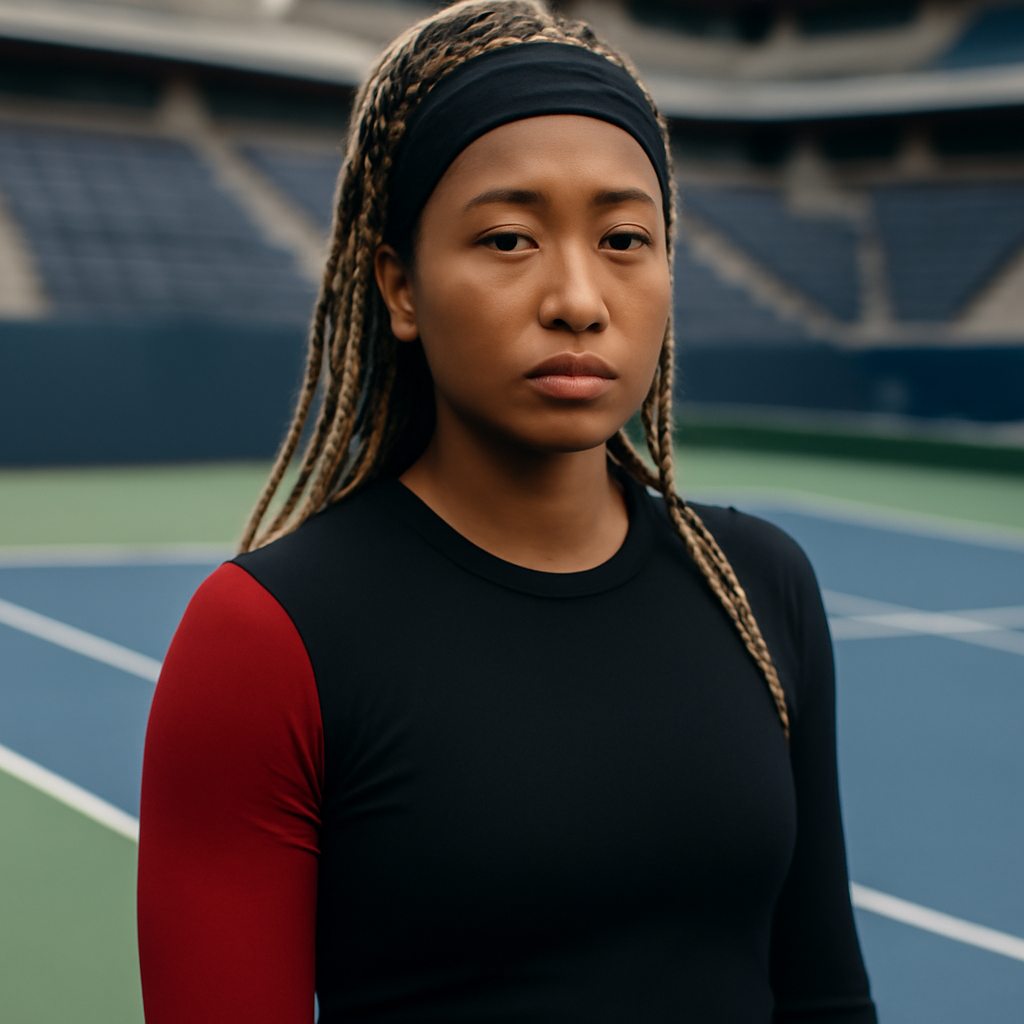
She wasn't borrowing style from another sport for a season. She was citing one man's specific fight. Iverson grew up in a poverty-stricken neighborhood of Hampton, Virginia, largely raising himself and a younger sister while the adults around him cycled through jail; the same defiance that got him out of Hampton is the defiance the league eventually tried to legislate out of its arenas. That fight produced the NBA's 2005 dress code — a policy that banned chains, do-rags, and the baggy silhouette that made Iverson recognizable, framed by the league as a business-casual standard and read by most players at the time as a response to one man's clothes in particular. Osaka wasn't old enough to have watched that fight unfold live. She's said only that the two had never met before this.
"He's kind of like done a lot in fashion, whether it's on purpose or not," she said afterward. "It's shifted the way that NBA players dress" — and, more broadly, "the whole conversation around clothes in sports, and also just expressing yourself through style." Iverson reposted her comments within the day: "Wow, what a honor!! Big fan, can't wait to meet you."
On court, none of the newsprint is legible at broadcast distance — just texture, a slight roughness catching the light differently than the tulle underneath it. The only person likely to ever actually read what's printed there is whoever stood close enough to weave it in.



