
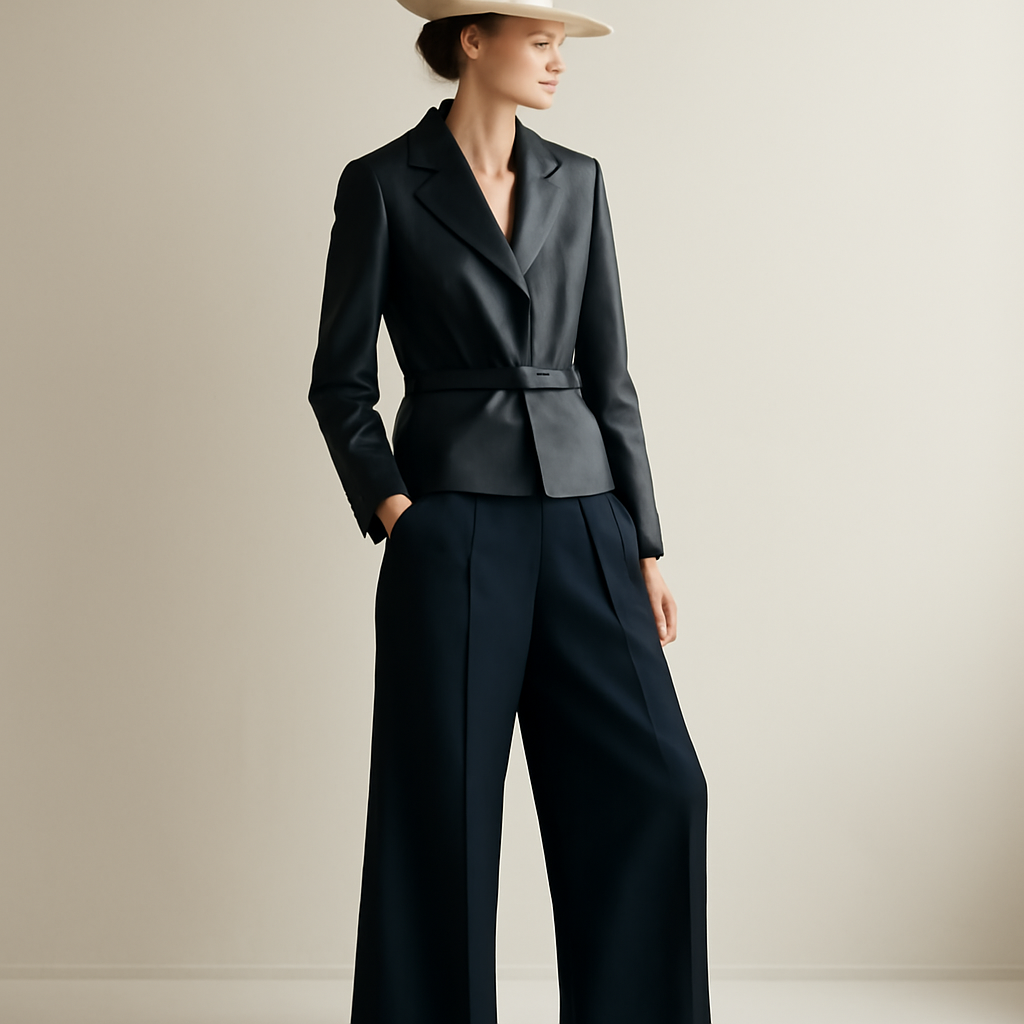
On Wednesday night, inside the Jack Shainman Gallery in lower Manhattan — a room Ralph Lauren has now shown in three times, treating it less like a stage than a borrowed exhibition space — a workwear jacket came down the runway erupting in white feathers at the collar, as though the garment had changed its mind about what kind of jacket it wanted to be partway through being made. Suit trousers were paired with a leather jacket, a boater hat, and ballet slippers: three different centuries of dress code worn at once, with no evident interest in reconciling them. Floor-length gowns followed in a loose, wet-look drape close to Fortuny pleating, and after them came utility pants and distressed denim mixed with embroidered velvet, as if two separate closets had been merged by accident. The palette held mostly to navy and white, which was the only conventionally familiar thing about the hour.
Lauren, 86, appeared briefly at the close to take in the applause and offered a description that undersold what had just passed: an irreverent take on romance that creates a new elegance. By most measures it was one of the least nostalgic collections he has shown in years — an odd thing to say of a designer whose whole reputation rests on the appearance of nostalgia, on rooms and wardrobes built to look inherited rather than invented. But that has always been the sleight of hand underneath his work: the past he sells was never actually his to remember.
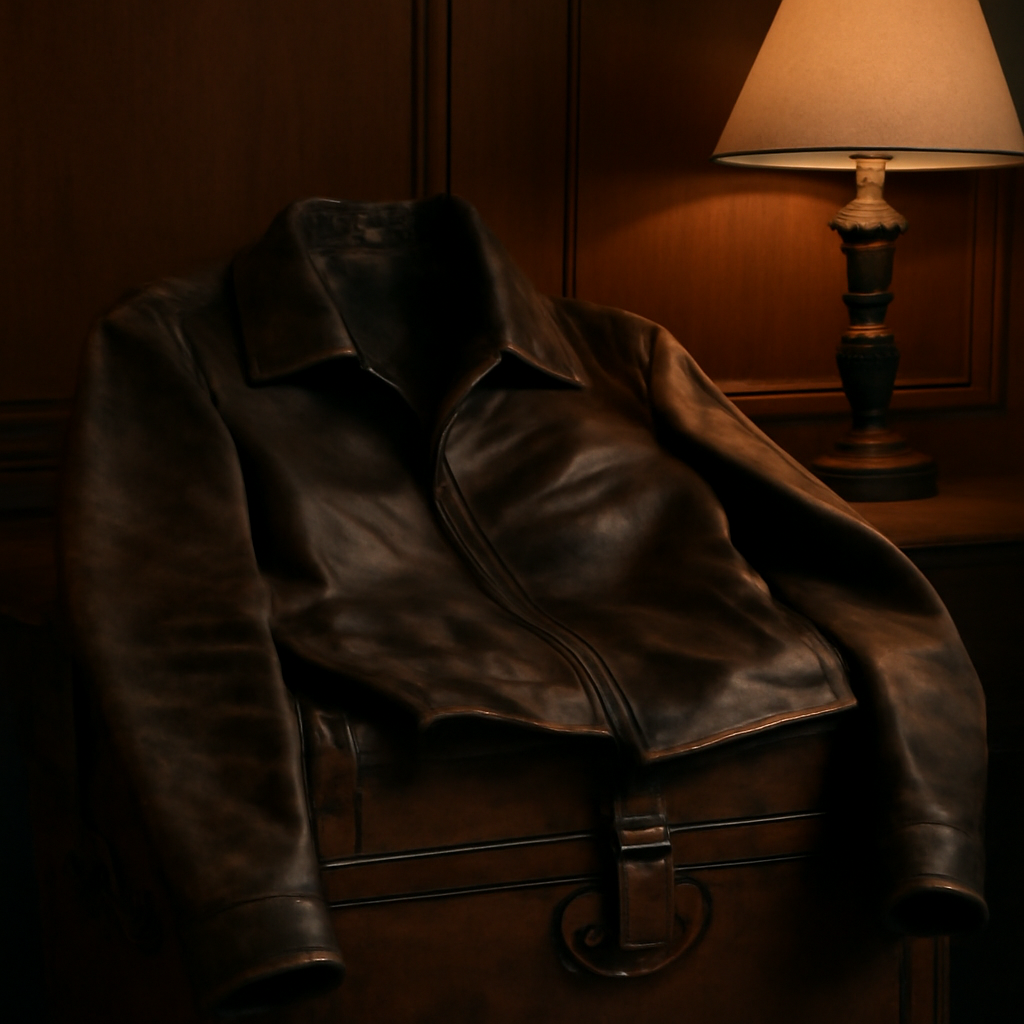
He was born Ralph Lifshitz in the Bronx in 1939, the youngest of four children of Ashkenazi Jewish immigrants from Pinsk, in what is now Belarus. His mother kept the household kosher; the family attended synagogue on Saturdays. At sixteen, tired of being teased over the name at DeWitt Clinton High School, he and his older brother changed it to Lauren. He served in the Army, sold ties at Brooks Brothers, then talked a necktie manufacturer into letting him start his own line at twenty-eight, working out of a single drawer in a showroom in the Empire State Building. The full menswear collection he built from that drawer, launched in 1968, he named Polo — an heirloom-sounding name for a sport with no family history behind it at all.
Everything that came after — the Adirondack cabins staged with decades of correct wear, the mallets that implied a grandfather who had actually swung one — was assembled by the same method as that first necktie line: research and instinct standing in for inheritance. The costume worked well enough that families who did have the inheritance started dressing like his advertisements instead of their own attics. What made this week's show different wasn't a break from that project so much as a rare glimpse of its seams left showing: an Edwardian collar pushed against a utility pocket, a gown's drape interrupted by a denim hem, nothing allowed to sit still long enough to pass as settled inheritance.
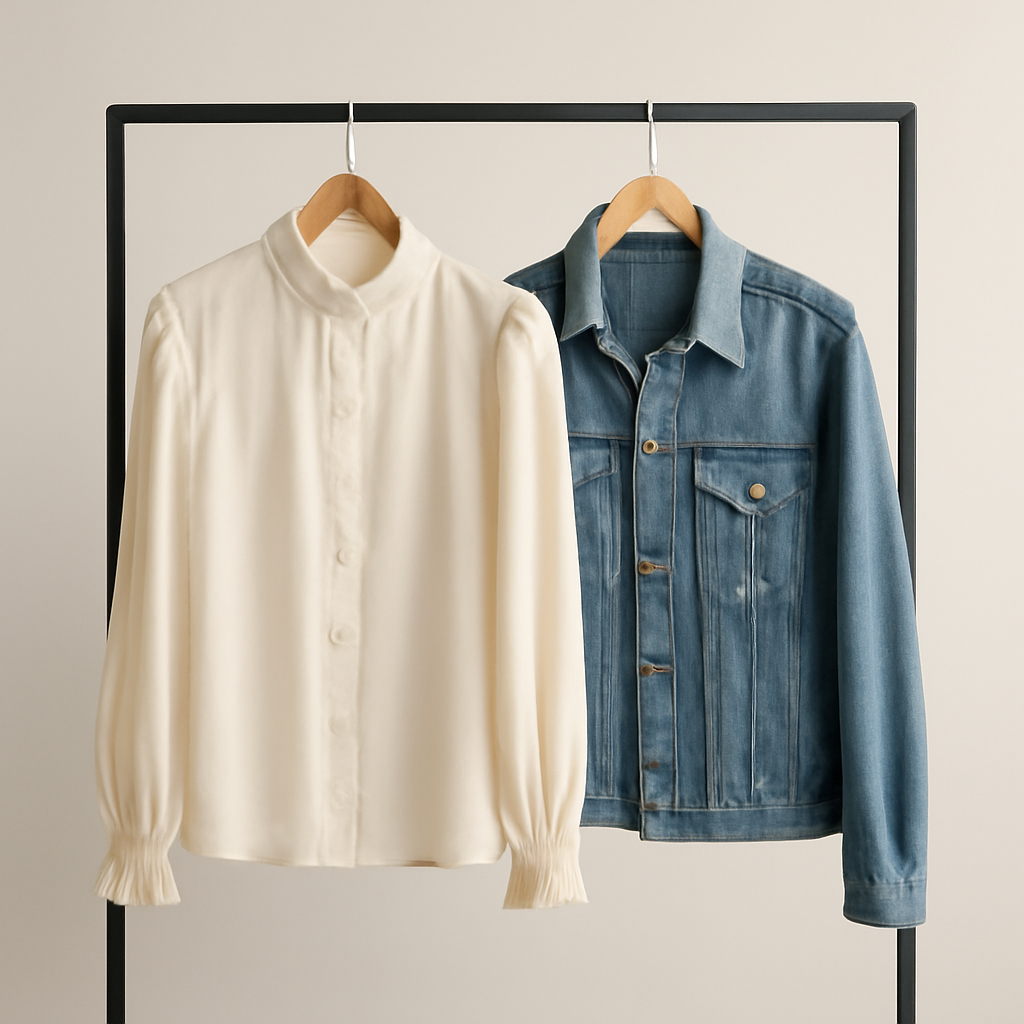
Near the end, a coat in a loose, unstructured cut passed by in white, its hem catching the gallery's track lighting the way a hem in an old photograph never quite does. He didn't linger on it. Neither did the room.



