
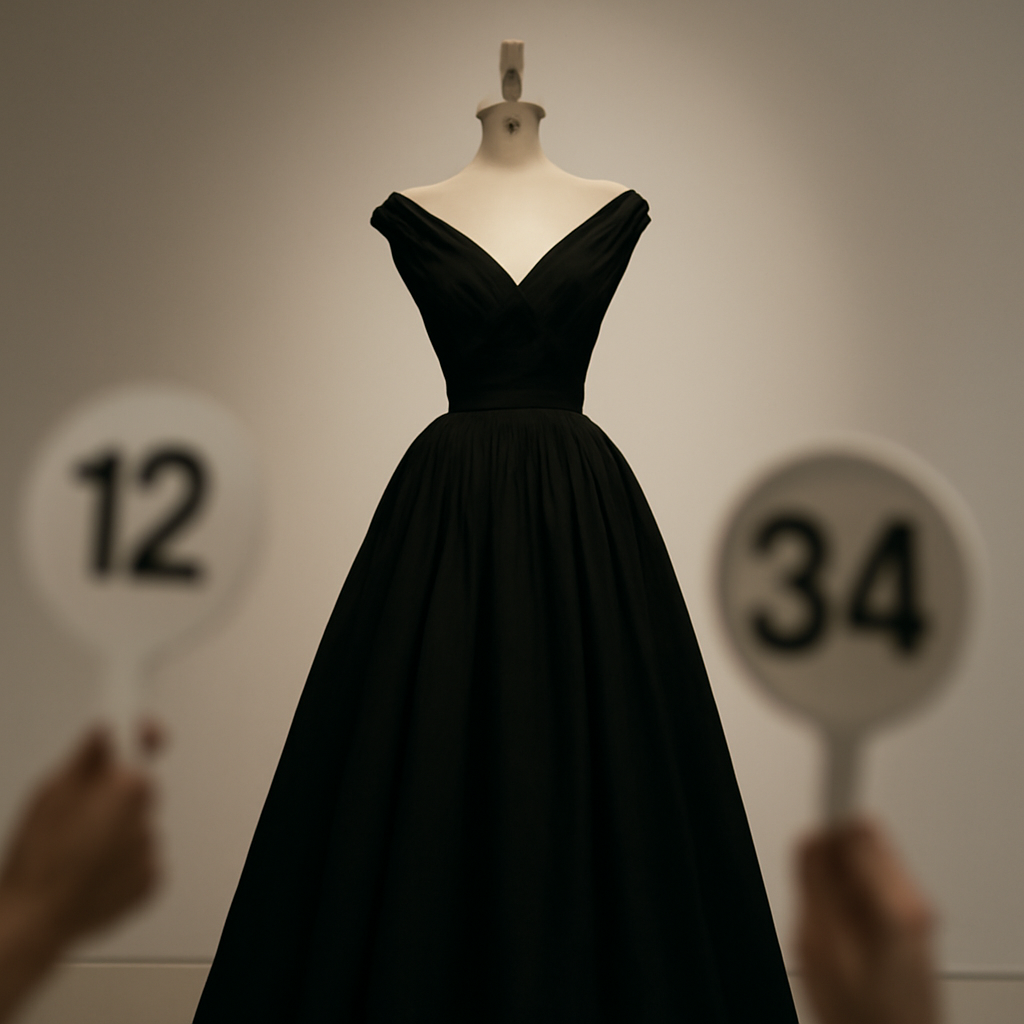
Fifty years of American ready-to-wear were arranged, for one night, inside a single room in Manhattan — a slip dress from Diane von Furstenberg's early years a few feet from a slab of nineteen-nineties Calvin Klein minimalism, itself not far from a Vera Wang gown built for somebody else's wedding. More than a hundred and fifty pieces in total, pulled directly from the archives of Diane von Furstenberg, Calvin Klein Collection, Michael Kors Collection, Proenza Schouler, Tommy Hilfiger, Vera Wang, and Willy Chavarria, arranged less by decade than by argument: this is what a fifty-year industry actually made, laid end to end under one roof. The editor and stylist Carlos Nazario curated the exhibit; the stylist Jenna Lyons hosted the live auction that ran alongside it, paddles going up, a bidding number standing between a stranger and a piece of someone else's career.
The occasion was Endless Runway: The Archive, staged to mark the opening of New York Fashion Week, run in formal partnership with the Council of Fashion Designers of America. The premise underneath it was fairly simple and faintly vertiginous: that the clothes which made American fashion legible as an industry — not just a handful of famous silhouettes, but the actual garments, with their own scuffed hems and loosened seams — could be gathered in one place and then, within hours, dispersed again into a hundred and fifty private closets.
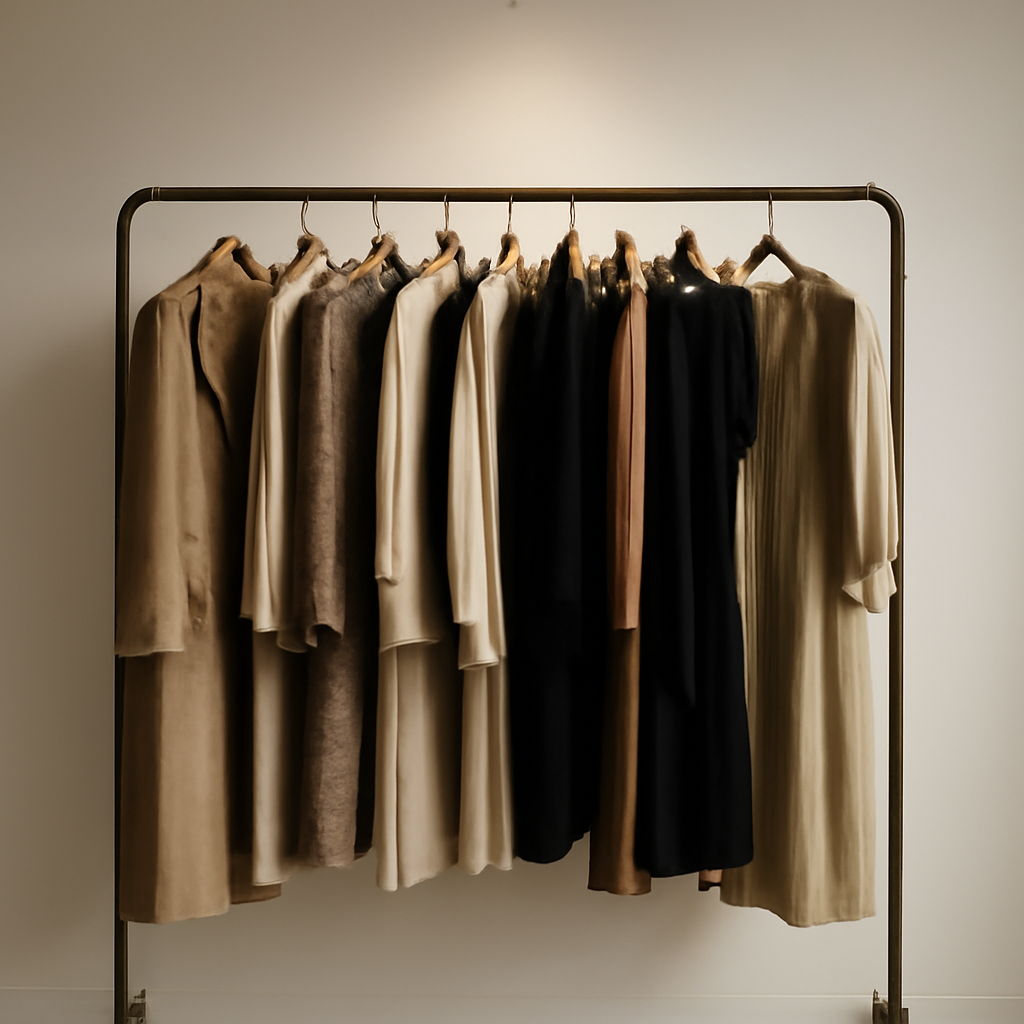
What the exhibition actually traced, walking its length, was a specific kind of American sentence: the glamour and liberation of the nineteen-seventies, when a wrap dress cut to go on and off in one motion was itself a small act of independence; the rise of American sportswear that followed, clothes built for movement rather than posture; the deliberate flatness of nineties minimalism, which made restraint itself into a house style; and, further along, the newer register Willy Chavarria works in now, tailoring sized generously enough to hold a body the fashion industry spent decades pretending didn't exist. None of these pieces needed a wall label to make an argument. They simply needed to be hung near enough to each other for the argument to become visible.
There is a particular texture to owning a piece of clothing that used to belong to someone whose face you can picture — a father's watch is the obvious version of this, but a coat works the same way, or a dress altered twice to fit a different woman's shoulders. The garment holds a kind of memory that has nothing to do with archival provenance and everything to do with proximity: it remembers whose hands were last inside the sleeves. What a night like this one does, at a much larger and stranger scale, is manufacture that same proximity for a stranger. Whoever wins the paddle for a piece from Diane von Furstenberg's early collections doesn't inherit a relative's clothing. They inherit an industry's, on purpose, for a price, with a receipt — which is either a much colder version of the same transaction, or an admission that inheritance was always a transaction to begin with, dressed up as something warmer.
It is easy, looking at that kind of range under one roof, to think of an archive as a fixed thing — a permanent record, kept safe in acid-free tissue. An auction argues the opposite. Every piece in that room had a reserve price and a closing bid, which is another way of saying every piece had an ending built into the evening: not preservation, but circulation. The dress does not go into a vault. It goes home with whoever raised a paddle highest, to be worn, or not worn, or hung in a closet next to clothes that were never anyone's career.
There is a version of this that reads as loss — the archive scattering the moment it's assembled, fifty years of argument broken back into a hundred and fifty separate private stories with no wall label attached. But scattering is also how a garment actually stays alive past the era that made it. A piece kept whole in an institution's climate-controlled storage is safe and also, in the ways that matter to a piece of clothing, finished: it will not be worn again, not really, not the way a dress is worn when someone has somewhere to be in it. A piece that leaves in a garment bag at the end of an auction night has a chance at an ordinary future — a dinner, a difficult year, a photograph nobody thinks to date. Running the sale through the CFDA, rather than a general auction house, meant the night closed a small loop of its own: an archive built by the trade group's own membership, dispersed at an event staged alongside that same membership.
By midnight the room had mostly emptied. What was left behind were the handful of pieces that hadn't sold, still catching the light the way everything in that room had for one evening — briefly, together, before going their separate ways.



