
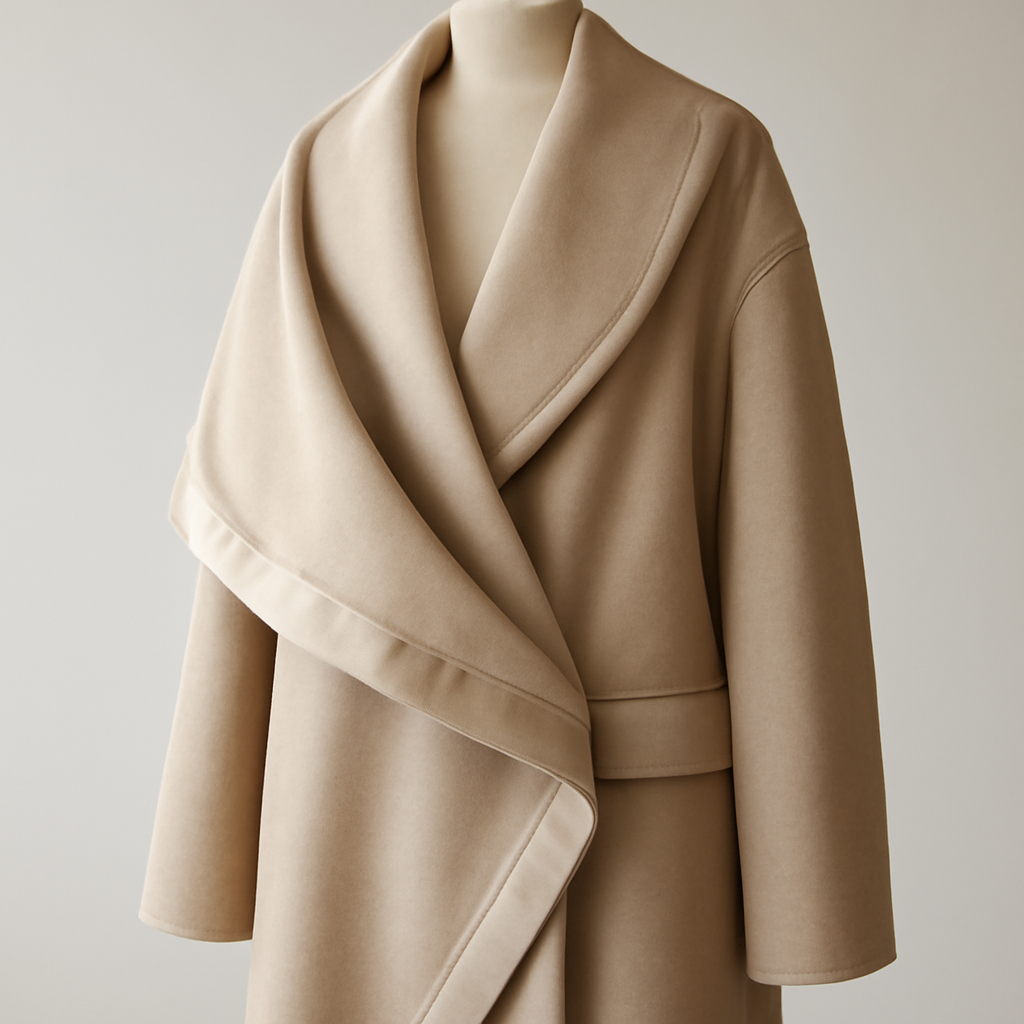
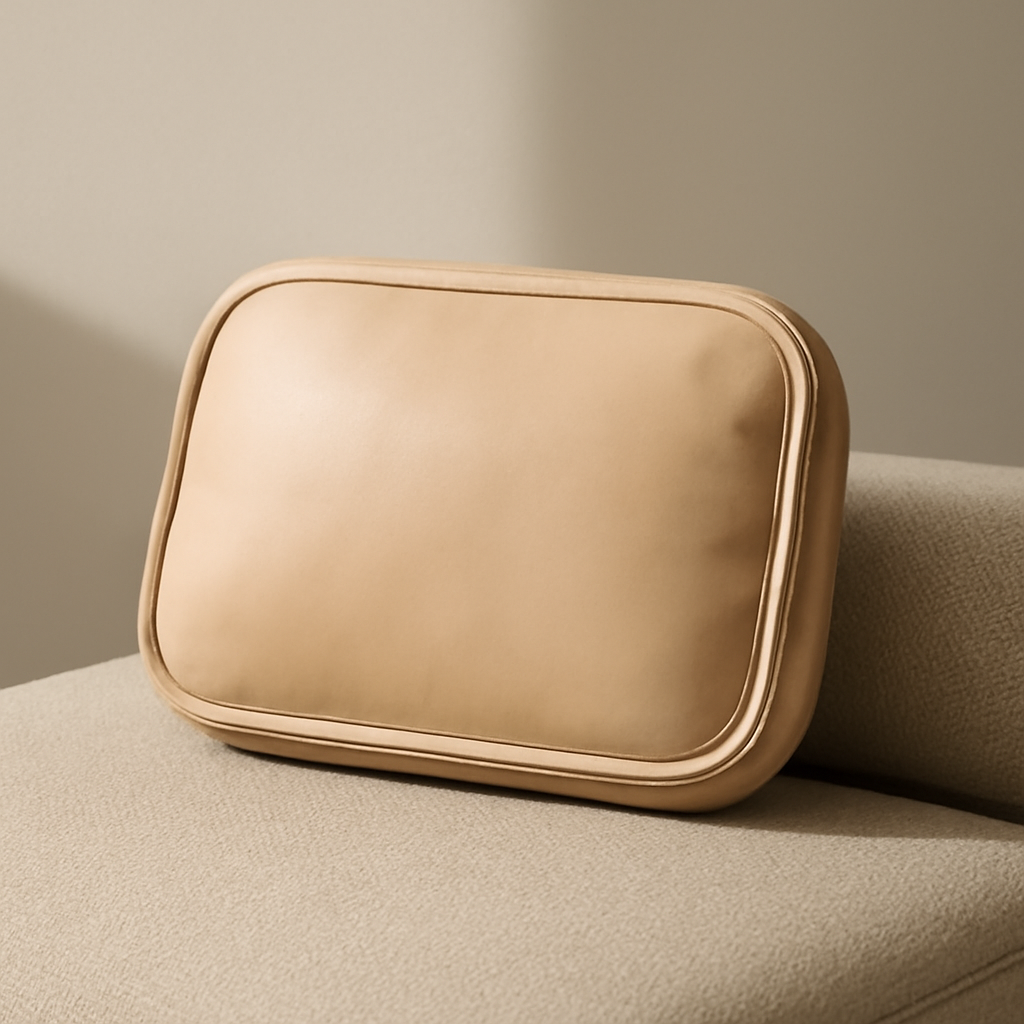
To build a coat that reads as a satin-trimmed bed blanket, Julie Kegels didn't start with a sketch. She pulled a stack of vintage clothes apart at the seams to study how they were built, then worked through furniture-upholstery tutorials — the kind a home decorator might use to reupholster a wingback chair — to learn how fabric gets pulled taut and pinned around a hard form. The research produced, among other things, a clutch shaped like a sofa cushion, with a false seam running where a cushion's piping would sit, and a slip skirt printed in the kind of chintz you'd expect on an armchair rather than a body. Kegels calls the effect she's after "a bit weird" — not a throwaway line, but close to a working method.
That instinct — treating a household object's construction as seriously as a couture house treats its own — is the throughline in the collection that just won Kegels fashion's largest single prize for an emerging designer: €400,000 and a year of mentorship from LVMH's own studios, awarded Friday at the Fondation Louis Vuitton in Paris, out of a field that started at 2,400 applicants. She is twenty-six, from Antwerp, and has run her own label for barely two years.
The Antwerp part matters more than a passport line usually does. Kegels grew up reading couture history books as a child and apprenticed with a local seamstress before she ever set foot in design school; her parents ran a catering business and a luggage line, and pushed cultural education over most other things. She studied at the city's Royal Academy of Fine Arts under Walter Van Beirendonck, the designer whose own decades of confrontational, theatrical menswear helped define what an Antwerp education is supposed to produce: something odder than a finishing school, closer to an apprenticeship in how to think.
Her 2021 graduate collection, "Supper Club," took its premise from Judy Chicago's installation The Dinner Party — twelve backless gowns, and, in the piece people still bring up, a lace bridal dress sealed in plastic and laid across a table as if it were the tablecloth. It's the same move as the cushion clutch, run in the opposite direction: instead of turning furniture into a garment, she turned a garment into furniture. When she launched her own label in 2024 with a collection called "50/50," after internships at Meryll Rogge and Alaïa, the idea shifted again — tailored suiting on the front of a look, shorts on the back, so that the same body reads as two different people depending on which way it turns.
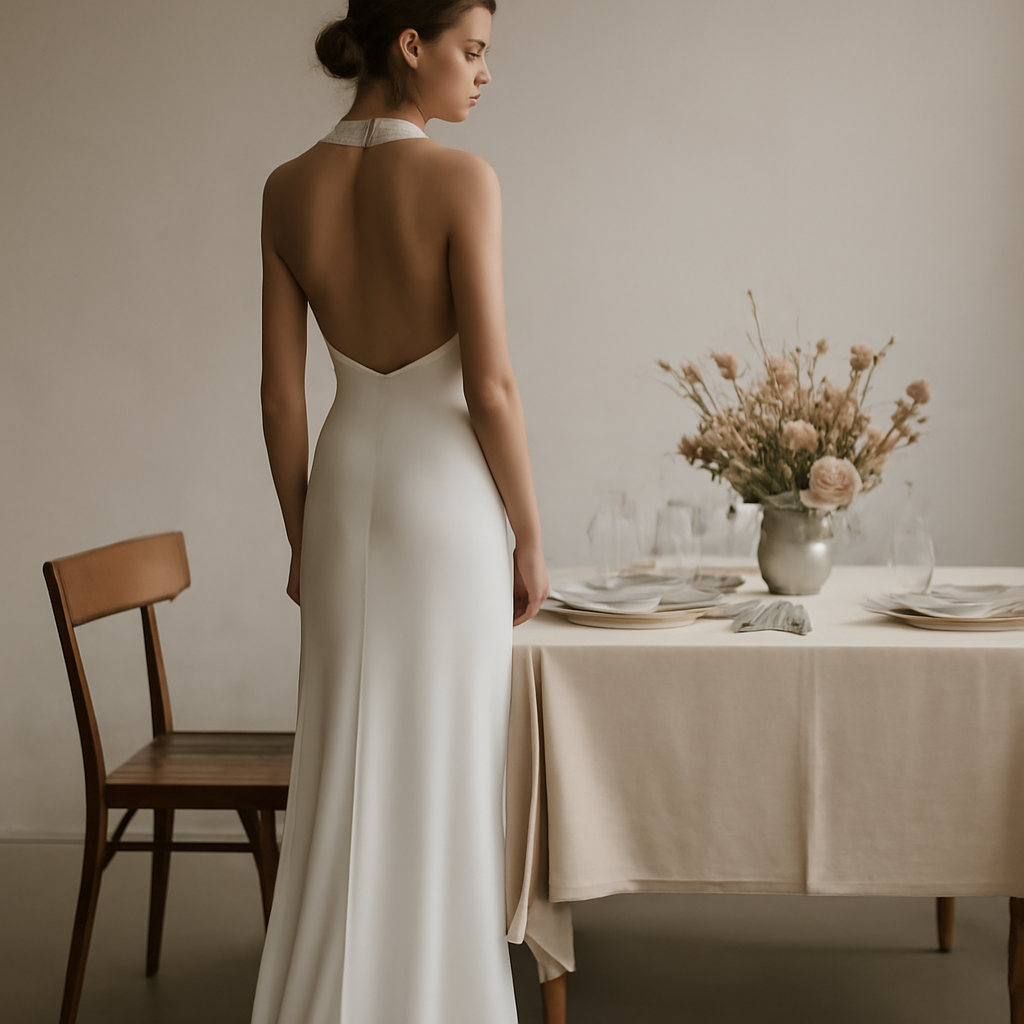
None of this reads as a gimmick in practice, because the underlying claim is consistent: that a woman doesn't hold one identity at a sitting, and clothing that insists on a single, legible self is doing her a disservice. Kegels has described working from "a group of women" she keeps in mind, who show up across a single collection in different, sometimes contradictory guises — ambitious in one look, feral in the next. It's a more demanding brief than a mood board, because it requires the tailoring itself to hold two ideas at once rather than picking one and rendering it well.
The LVMH jury's decision doesn't change the working method, and Kegels doesn't seem to be angling to sand down the weirdness now that the industry's largest institutional backer is watching. The upholstery tutorials, the plastic-wrapped bridal gowns, the suit that turns into shorts mid-stride — these were never provocations aimed outward. They read, at close range, like someone working out what a body is allowed to be at once. Put the cushion-shaped clutch down on an actual sofa, next to actual cushions, and for a moment it's genuinely difficult to tell which one is the bag.



